
Last updated November 15, 2026
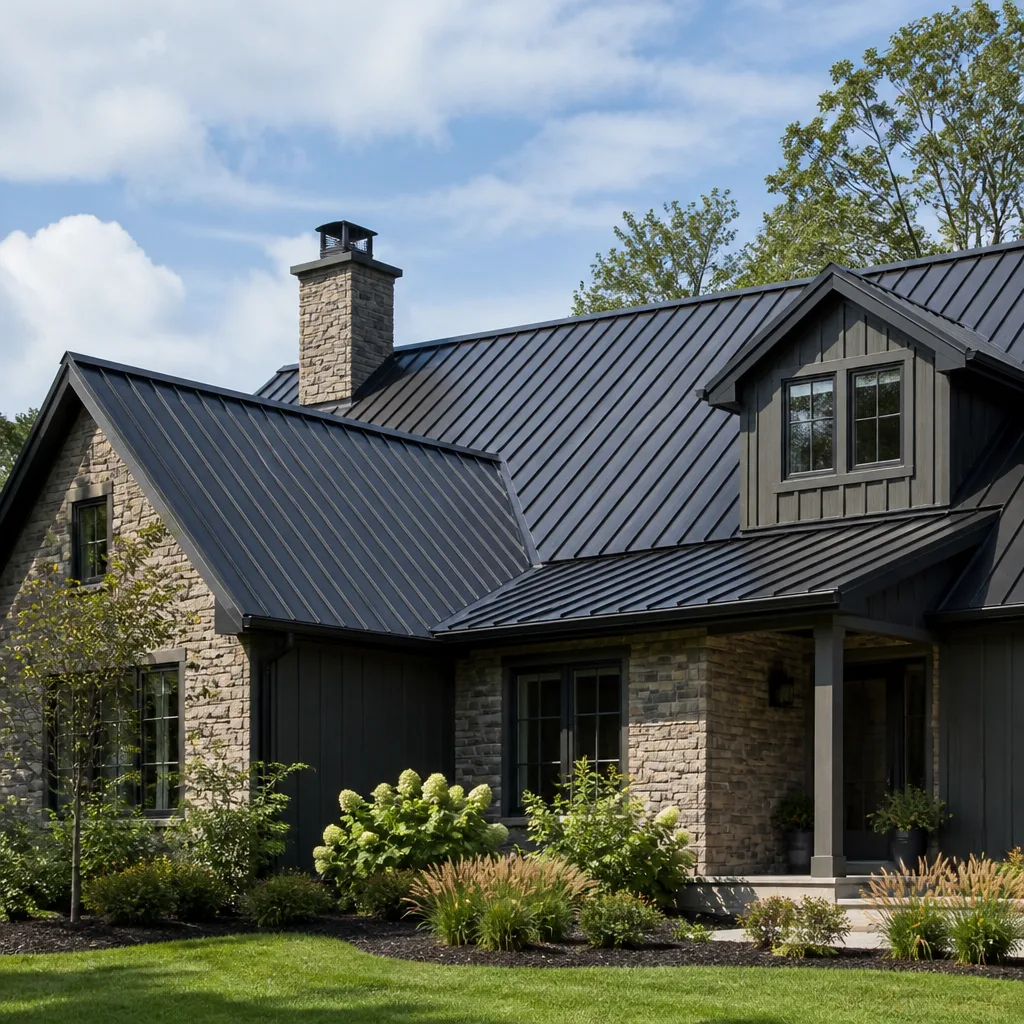 Metal roofing
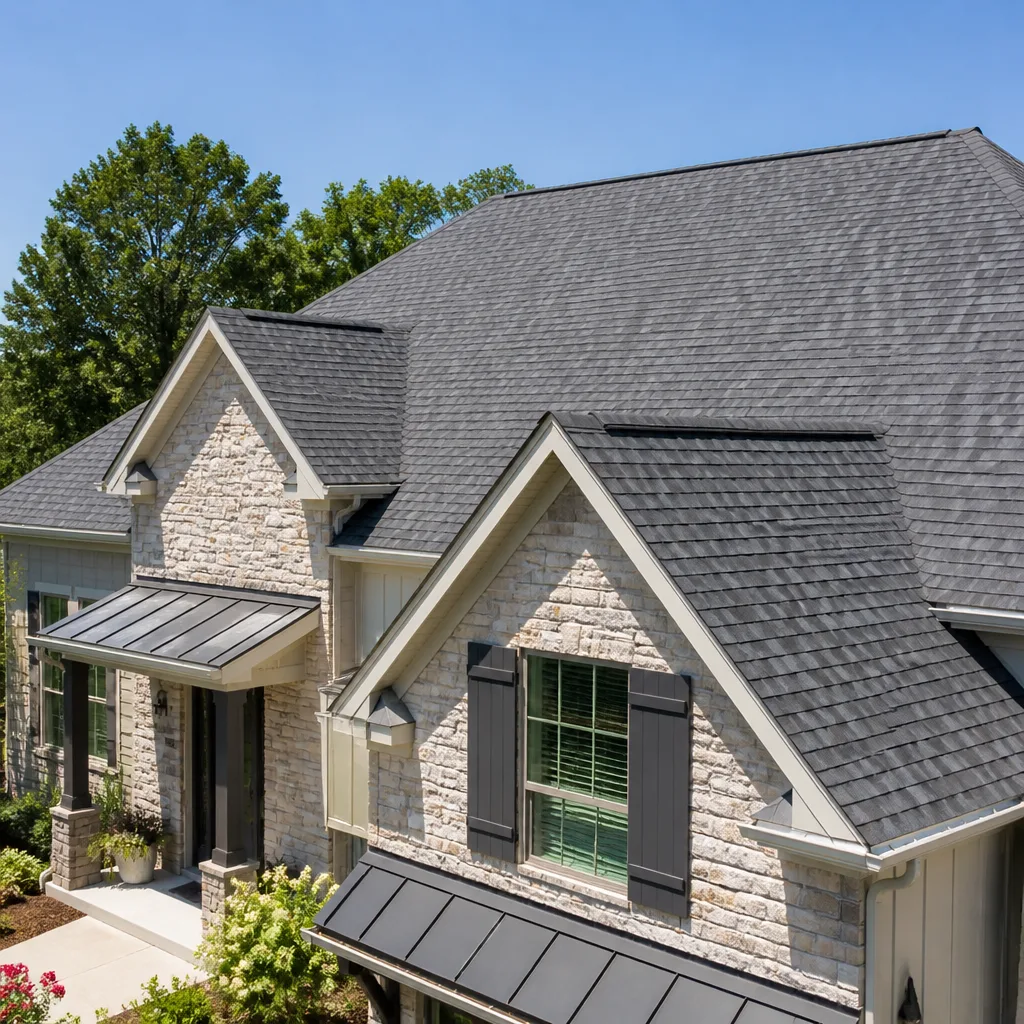 Architectural shingles
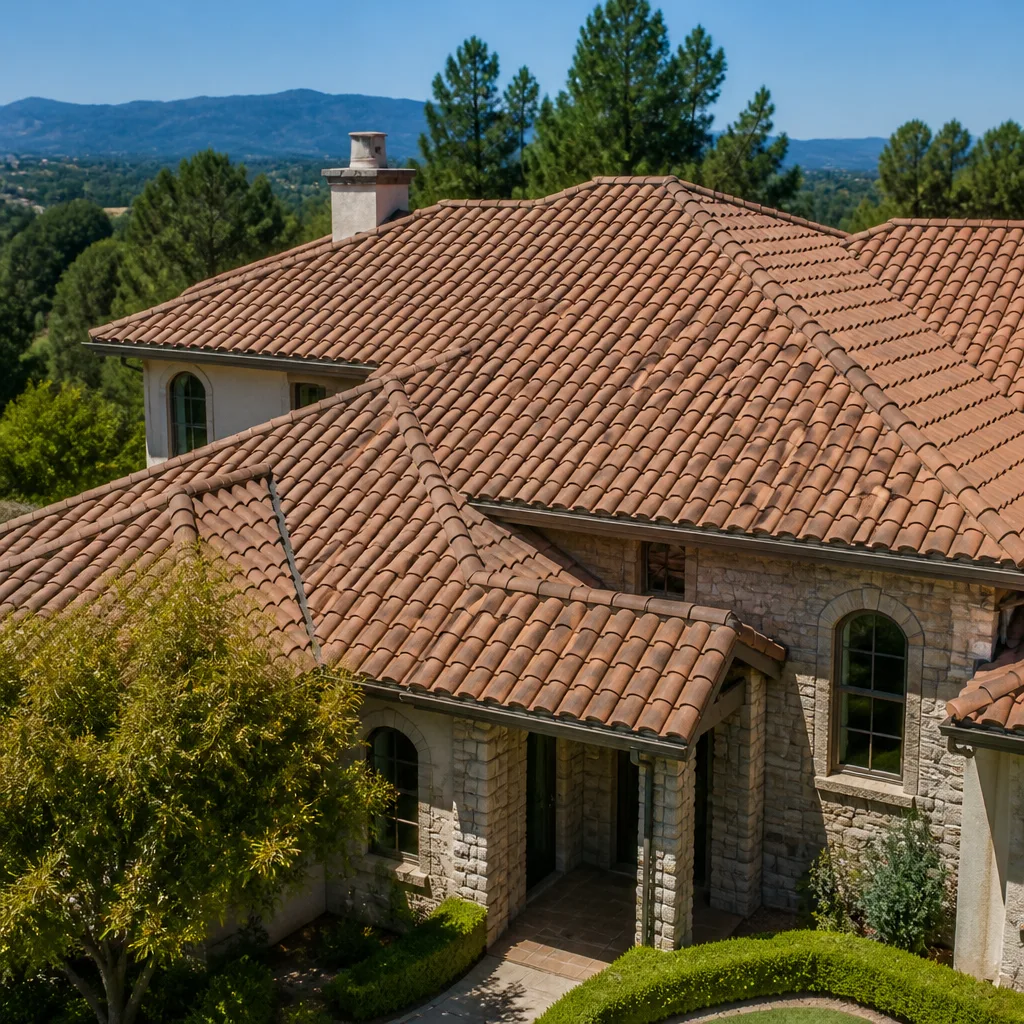 Tile roofing
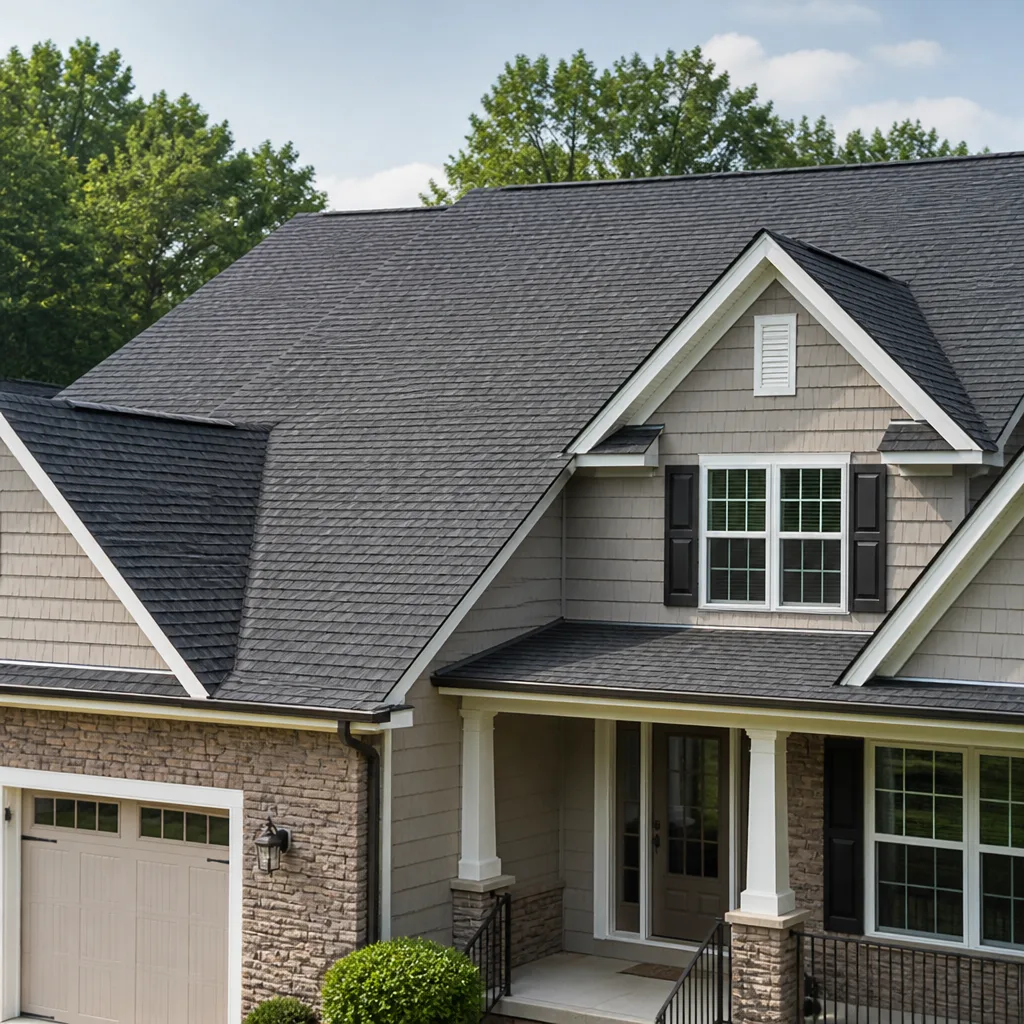 GAF
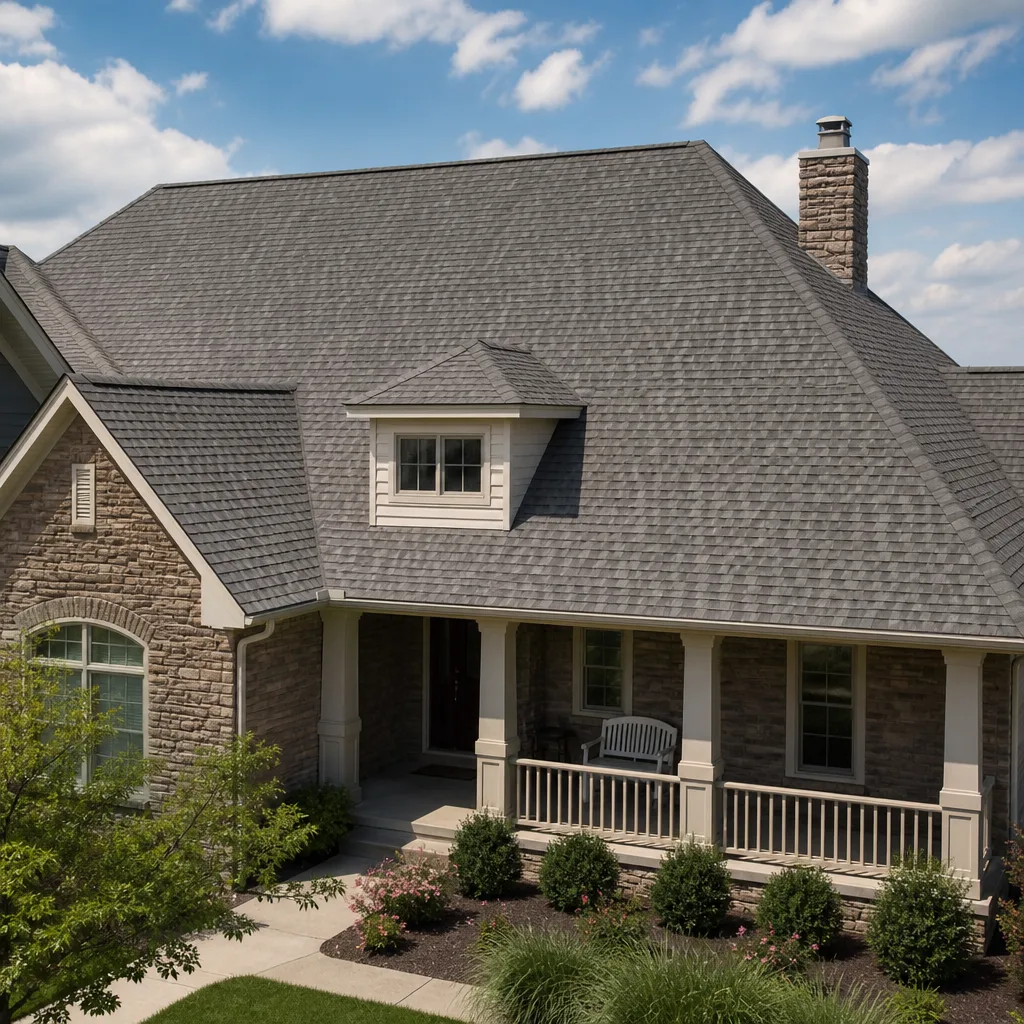 Owens Corning
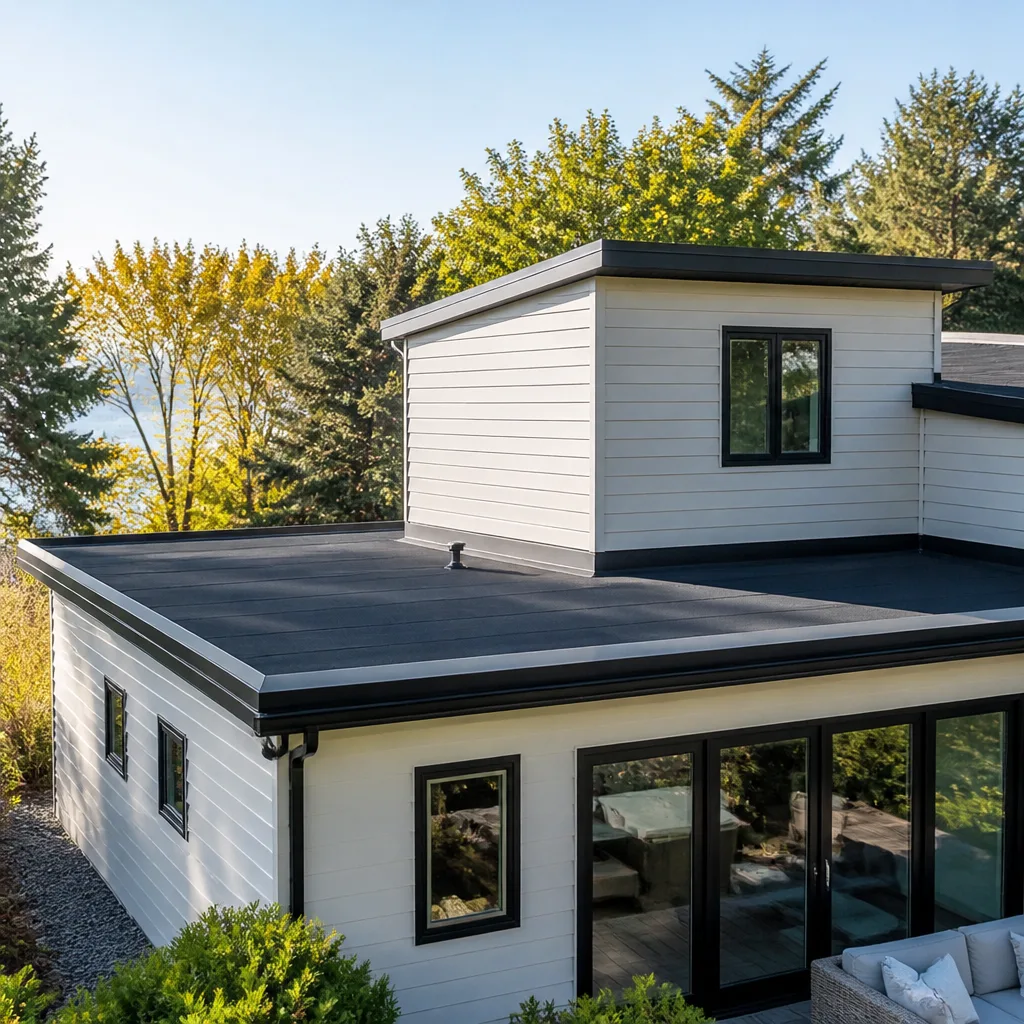 Flat & low-slope
Free roof inspection with deck photos before we talk money - GAF and Owens Corning certified installation
DIY vs Professional Roofing: The Syracuse Homeowner’s Decision Guide
The most common DIY roofing failure we see in Syracuse isn’t poor technique. It’s correct technique applied in October when the temperature was 38 degrees, and the self-seal strips never activated. The roof looked fine from the ladder. It looked fine all winter. Then the first ice dam pushed water sideways under shingles that were never bonded to each other, and the ceiling stain showed up in February. That gap between “looks installed” and “is actually sealed” is the whole argument in this guide. We’ll walk through what a shingle roof needs to perform, what’s genuinely reasonable to do yourself, what voids warranties, and how the math changes once you count tools, time, and risk.
Quick Answer
For most Syracuse homeowners, professional installation is the right call for anything beyond minor repairs, not because DIY is dangerous on a single-story ranch, but because shingle roofs only seal within specific temperature and adhesion windows, and Syracuse’s shoulder seasons make those windows hard to hit on a DIY schedule. Small tasks like swapping a pipe boot, replacing a few shingles, or fixing ridge cap are reasonable DIY projects. Full roof sections, tear-offs, and anything requiring a permit are better handled by a licensed roofer, both for warranty validity and for insurance reasons if something leaks later.
Styles & brands we work with
- Architectural shingles
- Metal roofing
- Tile roofing
- GAF
- Owens Corning
- Flat & low-slope
Table of Contents
- Why Temperature Windows Decide Whether Your Roof Seals
- What Work Is Genuinely DIY-Appropriate
- How DIY Installation Voids Manufacturer Warranties
- Real Cost Comparison: DIY vs Professional
- Permits, Inspections, and Onondaga County Liability
- How to Hire a Roofer in Syracuse
- How Syracuse Climate Shapes Roof Decisions
- Frequently Asked Questions
Why Temperature Windows Decide Whether Your Roof Seals
Self-seal strips on asphalt shingles activate through heat and pressure. The adhesive under each shingle tab softens when the roof gets warm, and the sun combined with normal wind loading bonds each course to the one above it. That bond is what turns a stack of overlapping shingles into a single waterproof membrane. Without it, you have a roof made of loose flaps.
Every shingle manufacturer publishes a minimum application temperature. Most roofers won’t install below the mid-40s to low-50s Fahrenheit because the adhesive gets stiff and uncooperative. A few manufacturers permit installation down to 40, but only with hand-sealing, which means dabbing adhesive under every tab by hand. That’s slow, tedious, and easy to skip when you’re 20 feet in the air on a Saturday morning trying to beat a rain forecast.
Now look at Syracuse’s calendar. Our reliable warm stretch runs roughly May through early September. Shoulder seasons swing hard. A 65-degree afternoon in April can drop to 35 overnight, and that overnight chill is when the adhesive sets without activating. In our experience, the most common DIY failure in Syracuse happens in the 35-to-50 degree band: warm enough to work outside, cold enough that the strips never bond.
The fix at the professional level is scheduling. We watch the forecast and won’t set a crew on a roof when the temperature window doesn’t support proper sealing. A DIY project usually runs on the homeowner’s vacation days and weekend availability, so the window gets chosen by the calendar rather than the weather. That mismatch is the actual risk. It’s not the ladder and it’s not the nail gun. It’s the temperature.
If you’re not sure whether your existing roof sealed correctly, a professional roof inspection can verify tab adhesion before the first winter storm puts it to the test.
What Work Is Genuinely DIY-Appropriate
Some roofing work is well within reach of a careful homeowner. These are the jobs where a mistake stays small and the labor cost is disproportionate to the difficulty.
- Pipe boot replacement. The rubber boot around plumbing vents cracks with UV exposure. Pulling the old boot and installing a new one is a two-hour job with basic hand tools, and it doesn’t require shingle material blending.
- Ridge cap repair on a low-slope or single-story section. If a few ridge cap shingles have lifted, replacing them is reasonable on a modest roof you can safely access with a sturdy ladder.
- Single-course shingle replacement after wind damage. Pulling a handful of lifted shingles and swapping in matched replacements is doable if you have spare material from the original install and the surrounding courses are intact.
- Gutter cleaning and drainage checks. Not roofing technically, but the most common cause of “roof leaks” we investigate is a clogged valley or gutters backing up under the bottom course.
- Attic-side inspection. From inside the attic, you can trace active leaks, look for daylight at the ridge, and check for moisture staining on rafters.
Anything that requires pulling up an entire slope, replacing decking, flashing a chimney or valley, or working on a steep pitch above one story isn’t really DIY. Not because homeowners can’t learn the technique, but because the tolerance for error runs out fast and the consequences show up six months later in a ceiling.
There’s also a safety line here. Roofing is one of the highest-risk trades for falls, and a fall from a two-story roof is a life-changing injury. If the pitch is steep, the access is awkward, or you’re not confident on a ladder, that’s the point where a licensed roofer earns their cost.
How DIY Installation Voids Manufacturer Warranties
Here’s the part most homeowners don’t learn until they need it. A shingle material warranty, the 25- or 30-year limited warranty that comes printed on the bundle wrapper, typically requires professional installation by a licensed contractor. That’s a standard term across the industry, not a quirk of one brand. Install it yourself and the material warranty usually evaporates, even if your workmanship was impeccable.
The reason isn’t cynical. Manufacturers can’t verify how the shingles were installed, at what temperature, with what ventilation, using what fasteners, or whether the flashing was integrated correctly. Without that verification, they won’t stand behind the product. When you buy IKO or Atlas or Tamko shingles from a supplier as a homeowner, you’re buying the material. What you’re giving up is the certification that the material was installed within the manufacturer’s requirements.
Workmanship warranties are separate and even stricter. Those cover installation errors for a defined period, and by definition they only come from the contractor who did the install. There’s no workmanship warranty on DIY work because there’s no installer to hold accountable but yourself.
The practical consequence: a DIY roof that fails at year six is entirely the homeowner’s problem. A professionally installed roof that fails at year six has two layers of recourse: the material warranty against defects, and the workmanship warranty against installation.
One more layer worth noting. Homeowners insurance covers sudden damage, like wind lifting shingles or a tree limb puncturing the deck. It doesn’t cover gradual water intrusion from poor installation, and no policy will treat a self-installed roof failure as a covered event. If you’ve done the work yourself and it starts leaking, the ceiling repair, the mold remediation, and the roof redo all come out of your pocket. That’s the warranty conversation in its bluntest form, and it’s why we tell homeowners to think of the manufacturer warranty as a feature of professional installation rather than of the shingle itself.
Real Cost Comparison: DIY vs Professional
The DIY math looks cheaper on a spreadsheet than it turns out in practice once you count the tool rentals, the material ordering, the waste factor, the time off work, and the risk of a mistake that requires remediation. Here’s how the two paths actually compare for a typical Syracuse area roof.
| Cost line | Typical DIY range | Professional all-in range |
|---|---|---|
| Shingle material | $110 to $160 per square | Included |
| Underlayment and flashing | $30 to $60 per square | Included |
| Dumpster or disposal | $400 to $800 | Included |
| Tool rental (nail gun, compressor, ladder, harness) | $150 to $400 | Included |
| Permit | Varies by municipality; check with the city or town | Pulled on your behalf |
| Labor (DIY: your time; pro: crew labor) | 40 to 80 hours of your time | Included |
| Risk of remediation if work fails | Entirely on you | Covered by workmanship |
| Manufacturer material warranty | Typically void | Preserved |
Add the time cost honestly. A full roof on a typical Syracuse ranch or two-story takes a crew of four two to three days. The same job as a solo homeowner, working around weather and daylight, usually stretches two to four weeks. That’s two to four weeks of exposed decking and partially installed shingles, which is exactly the situation that invites water damage when a Syracuse thunderstorm rolls through unannounced.
The professional quote is higher on the material sheet because it includes the labor, the disposal, the permit, the tools, and the accountability. What it doesn’t include is a second attempt. That’s the actual line item DIY pricing usually leaves off. When you’re ready to compare real numbers, we offer roof repair and roof replacement estimates at no cost so you can see the professional figure next to your DIY math without any sales pressure.
What About Partial DIY?
A hybrid approach sometimes works. You handle the attic ventilation upgrades, gutter work, or trim, and a professional handles the shingle installation. That keeps the labor you’re confident in and puts the parts that require manufacturer compliance with someone licensed to do it. It’s not the arrangement every roofer offers, but it’s a reasonable conversation to have when you’re weighing cost against risk.
Permits, Inspections, and Onondaga County Liability
Most roof replacements and structural repairs in Onondaga County require a building permit, but permit rules are administered by the specific municipality, so the requirement in the City of Syracuse is not automatically the requirement in a surrounding town or village. Ask the local building department before you buy material. A permit is cheap compared to the penalty for skipping one.
The inspection that comes with the permit matters more than the piece of paper. An inspector verifies things like deck integrity, flashing integration, ice barrier placement, and fastener patterns, which are precisely the elements a homeowner is most likely to get subtly wrong. Not because the work looks wrong, but because the flaws are invisible until a leak proves them.
Unpermitted work creates downstream problems beyond the inspection itself. When you sell a house, a buyer’s inspector can flag unpermitted roofing work, and the sale can stall while you sort out retroactive permits. When your insurer asks about a loss, a claim on an unpermitted roof may draw extra scrutiny, and in a worst case, the coverage itself can be disputed. None of those outcomes are certain, but all of them are possible, and the permit is the cheapest way to avoid the whole question.
For a homeowner who is going to live in the house indefinitely, the risk runs the other way: no permit means no inspection means no independent verification that the work was done to code. When water shows up in the attic a few winters later, you won’t know what to fix because you won’t know what was missed.
If you’re planning a roof replacement or a substantial repair, we pull the permit as part of the job. That’s not a marketing line. It’s the difference between work that passed inspection and work that didn’t.
How to Hire a Roofer in Syracuse
If you’ve decided to hire, the decision isn’t over. It’s just moved. Syracuse has plenty of roofing companies, and the difference between a good one and a bad one shows up years later. Here’s the sequence we recommend for evaluating any contractor, including us.
- Ask for proof of license and insurance. In New York, general liability and workers’ compensation coverage protect you if something goes wrong on your property. Ask for the certificate directly, and if it’s a company you don’t know, call the insurer to confirm the policy is active.
- Ask what shingle brands they work with, and why. A contractor tied to one manufacturer has a reason to push that brand. A contractor who works across several has more flexibility to match the material to your roof and budget. We work across seven manufacturers including IKO, Atlas, Tamko, and Boral, and the recommendation you get from us depends on your roof and budget, not on which manufacturer gave us the best margin.
- Request a written line-item estimate. The quote should show material specifications, labor, disposal, permit, and any items that are excluded. Vague lump-sum quotes are the ones that grow change orders.
- Ask for the inspection findings in writing. Before anyone recommends a full replacement, ask what they found and what would need to be true for repair to still be a sound answer. On a repairable roof, repair-first is the honest recommendation, even though it’s smaller work.
- Ask how permits and inspections are handled. If the contractor doesn’t want to pull a permit, that’s a signal worth listening to.
- Confirm the workmanship warranty terms before signing. Ask exactly what’s covered, for how long, and what triggers a claim. Get it in writing.
- Check the scope of the company. A roofer who also does kitchens, decks, and landscaping divides their attention. A roofing-only contractor has built their process around one trade.
Why Repair-First Matters
A roof with a dozen years of service left and one localized leak doesn’t need replacing. It needs repair. That’s an easy claim to make and a harder one to hold to when a full replacement is more profitable. Our rule is simple: we’ll tell you if a repair will hold, and we’ll tell you when it won’t. If the deck, the underlayment, and the flashings are intact and the problem is localized, we’ll quote repair. If the roof has lost too much of its waterproofing layer, we’ll tell you that honestly as well.
If you want to know which situation you’re in before committing to anything, a standalone roof inspection gives you a straight assessment without the pressure of a repair or replacement decision attached to it.
How Syracuse Climate Shapes Roof Decisions
Syracuse is not a mild climate for roofing. The snowfall totals across the winter are substantial, the freeze-thaw cycling through November and March is relentless, and the lake-effect patterns mean that localized heavy snow bands can dump significantly more accumulation on one neighborhood than on another a few miles away. That’s why roof performance here depends far more on correct detailing than it does in, say, a temperate southern city where the sun and heat do most of the work.
Three climate factors drive most of the roofing decisions we see in Syracuse.
- Ice damming. Heat escaping through a poorly insulated attic melts snow near the ridge, the meltwater refreezes at the eaves, and the resulting ice dam pushes water under shingles. Correct ice barrier installation at the eaves prevents it. A DIY roof that skips the ice barrier, or substitutes standard underlayment, has created the conditions for trouble that shows up every February.
- Snow load. Roof assemblies in Syracuse are designed for significant snow loads, but a roofer who alters the structure during replacement can compromise that design. If you’re replacing decking or structure, the assembly needs to meet code, not just look right from the ground.
- Freeze-thaw on flashing. Chimney and skylight flashings go through hundreds of expansion and contraction cycles a season. Under-flashed joints open up slowly. The homeowner sees nothing until a wet spot appears on the ceiling, then assumes the shingles failed when the flashing is the actual culprit.
Neighborhoods on Syracuse’s higher ground, and out toward the hillier terrain around the city, see more of this than the flatter neighborhoods. That’s not a reason to expect failure. It’s a reason to make sure the roof was detailed right the first time, whether that was you or someone you hired.
Whatever the material you choose, the assembly matters more than the brand. Our approach is to pick the shingle based on the roof and the budget, not the other way around. Seven brands, one recommendation: the right one for your roof. If you want to understand your own options, we’re happy to walk through them on a free estimate call.
Common Mistakes to Avoid
- Installing shingles below the manufacturer’s minimum temperature. We’ve seen the failure pattern often enough to spot it on inspection. If the daytime high is in the 40s and you don’t hand-seal every tab, the adhesive will not activate, and the roof will not be watertight until the following summer. If that summer doesn’t happen before an ice dam does, the interior pays for it.
- Skipping the ice and water shield at the eaves. In Syracuse this is not optional. It’s the single most impactful detail for preventing spring ice-dam leaks, and it’s invisible after the shingles go on. A roofer who skips it should not be doing work in this climate.
- Re-covering instead of tearing off decking that’s already failed. Layering new shingles over rotten or soft decking looks fine from outside and fails from inside. Whenever the old roof is torn off, the deck should be checked board by board before the new assembly goes on.
- Assuming “looks fine” means “sealed fine.” A roof installed in the shoulder season can look perfectly aligned and still have every self-seal tab unactivated. The visible test is whether shingle tabs lift with a light tug. If they do, the roof hasn’t bonded.
- Buying the wrong underlayment to save money. Standard felt underlayment and ice and water shield are not interchangeable in Syracuse. The eave zones need the latter. Suppliers will sell you whichever you ask for.
- Ignoring flashing at chimneys and skylights. Shingle failures get the attention, but flashing failures are the more common leak source. If you’re not confident flashing a chimney, don’t DIY that part of the roof.
- Skipping the permit to save time. The permit process adds a few days to the schedule and provides an independent inspection of the work. The downside of skipping it lands entirely on the homeowner, not the contractor, and not the supplier.
See the difference
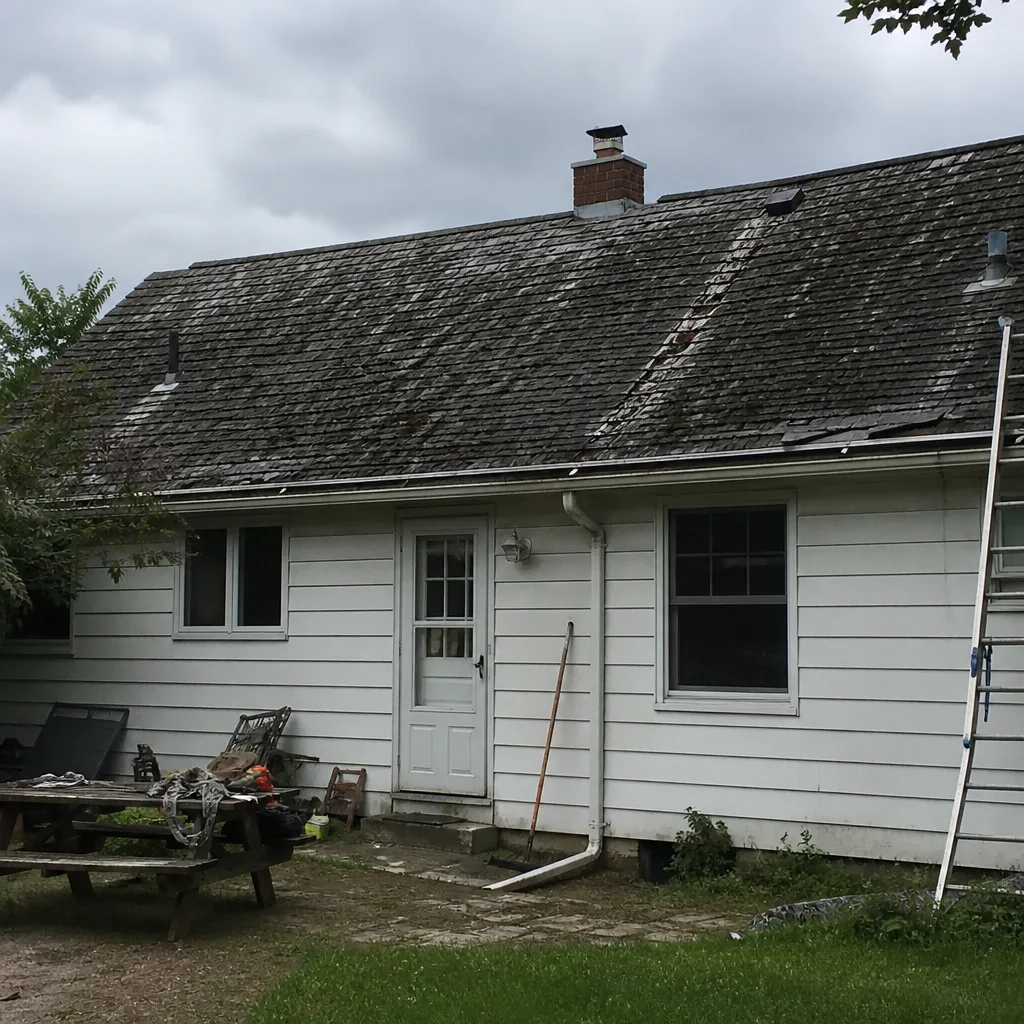 Before
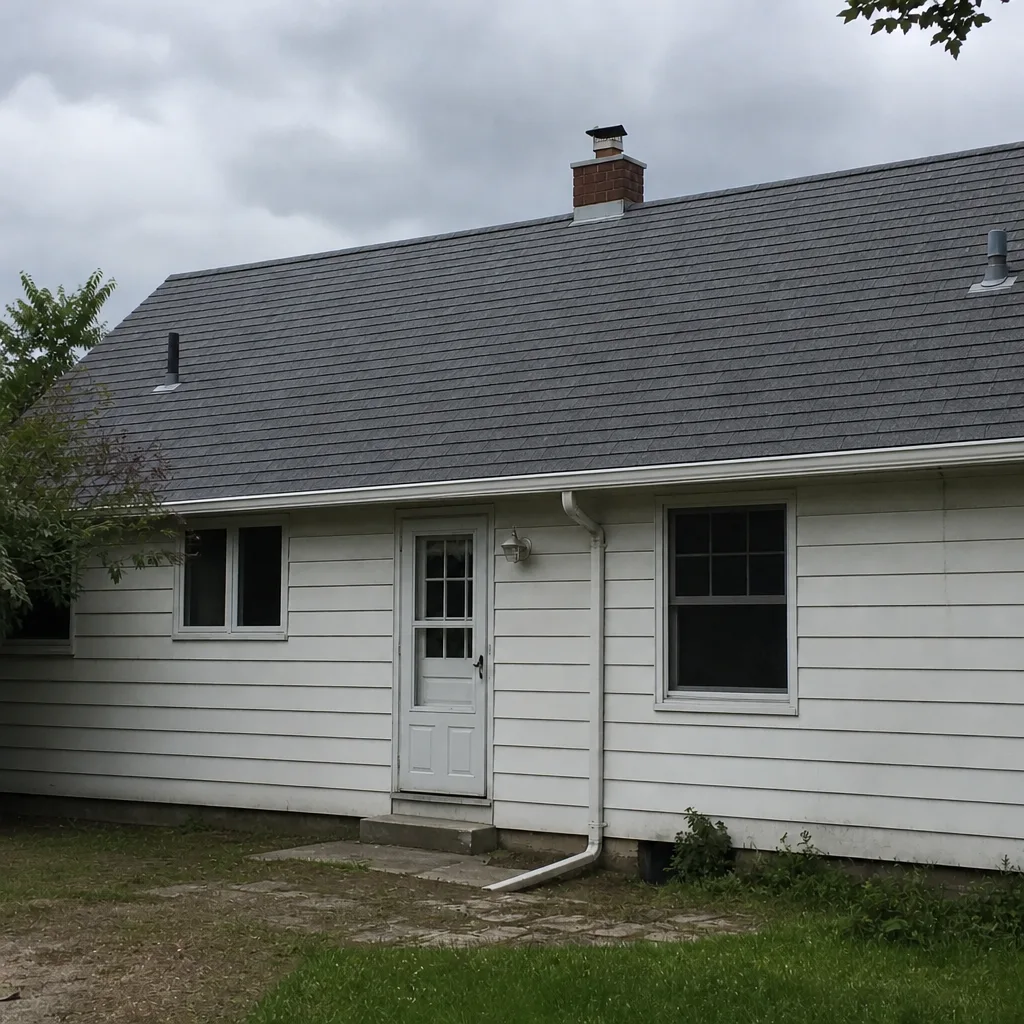 After
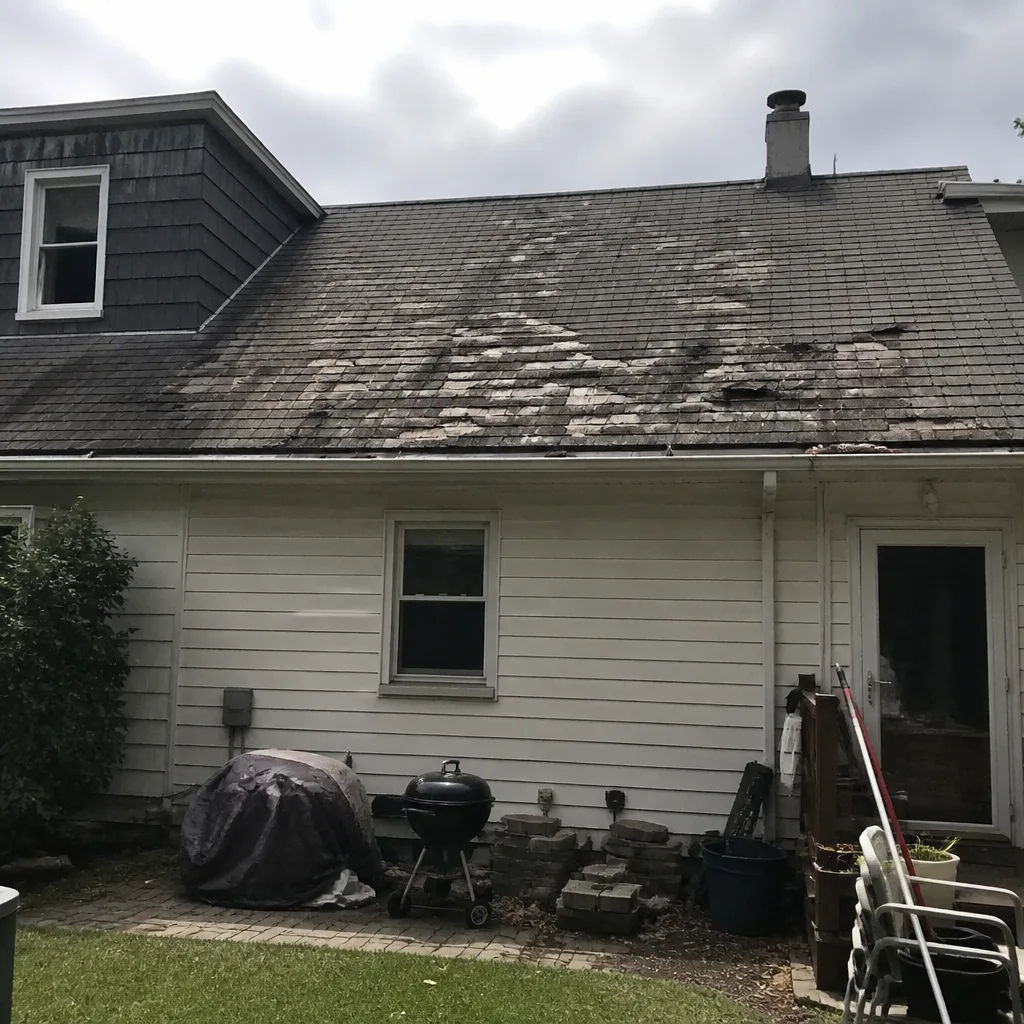 Before
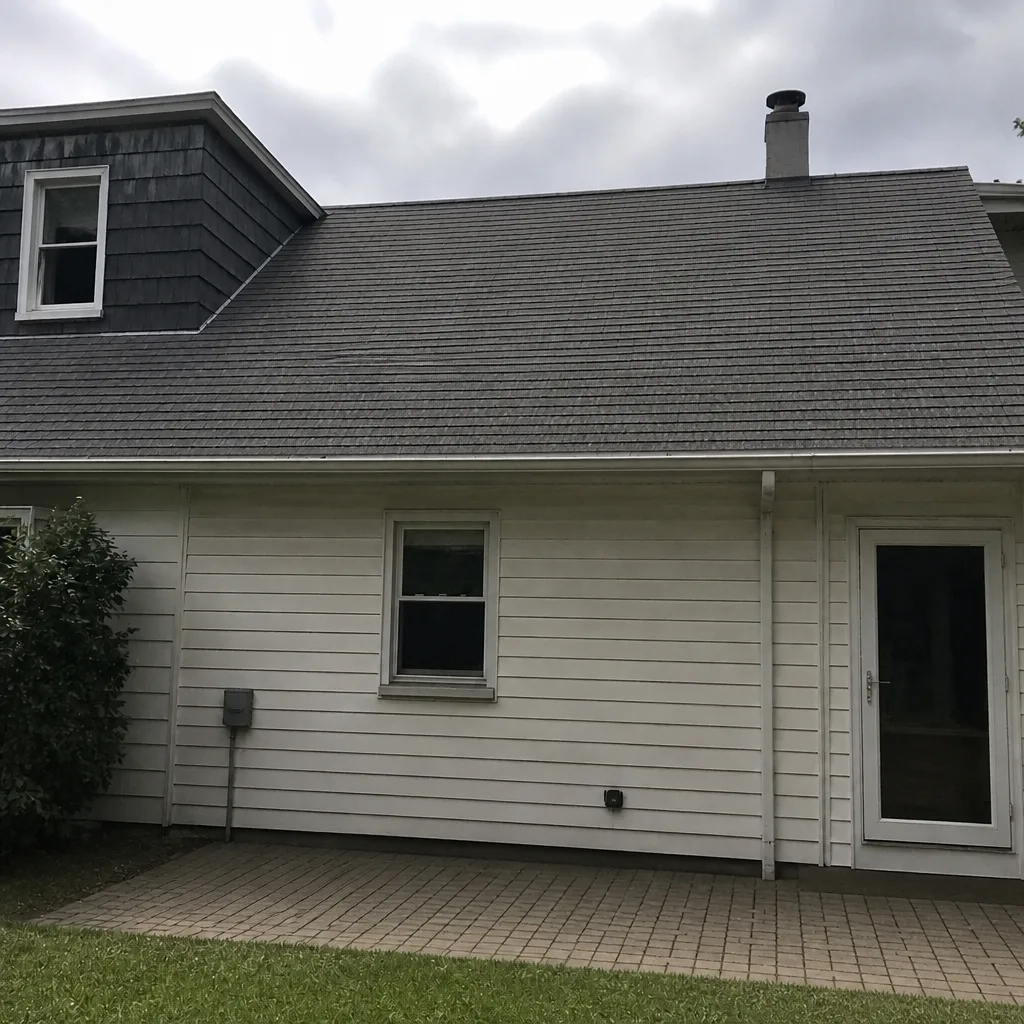 After
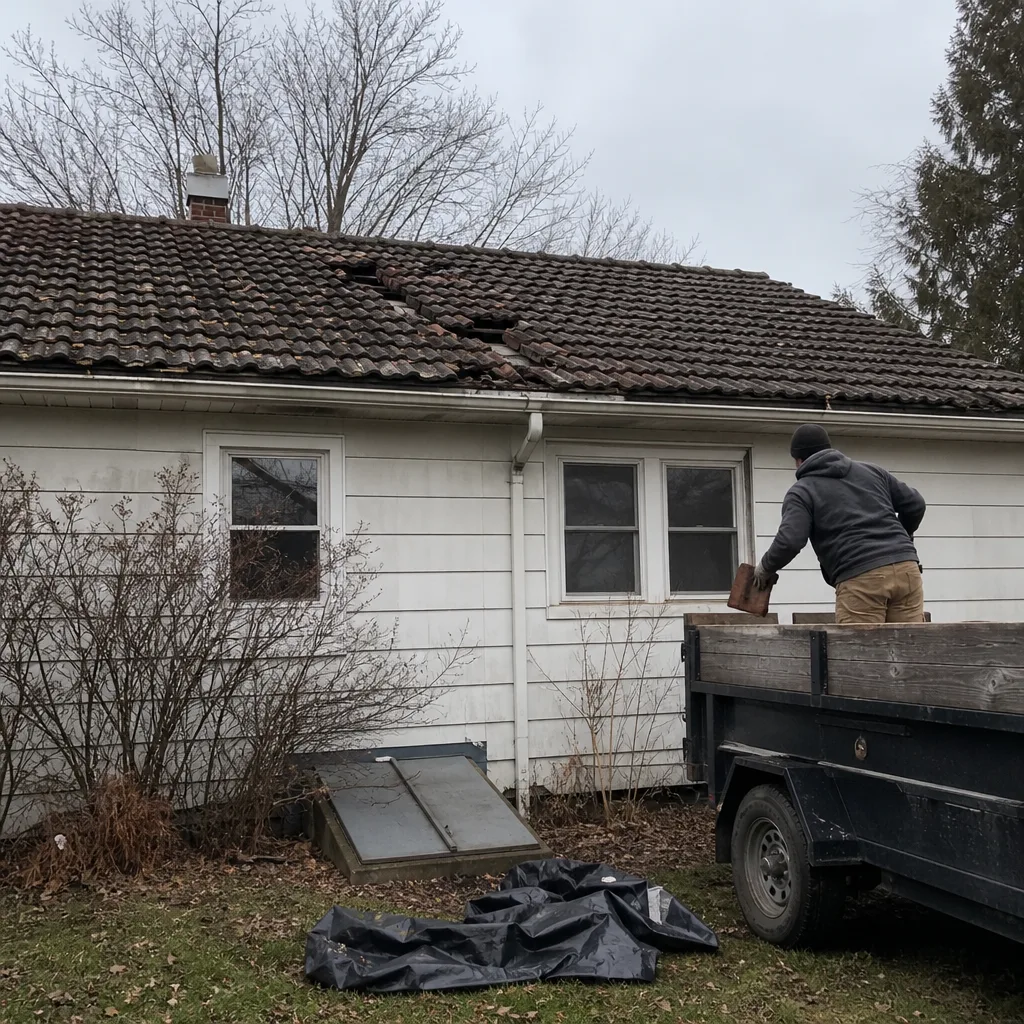 Before
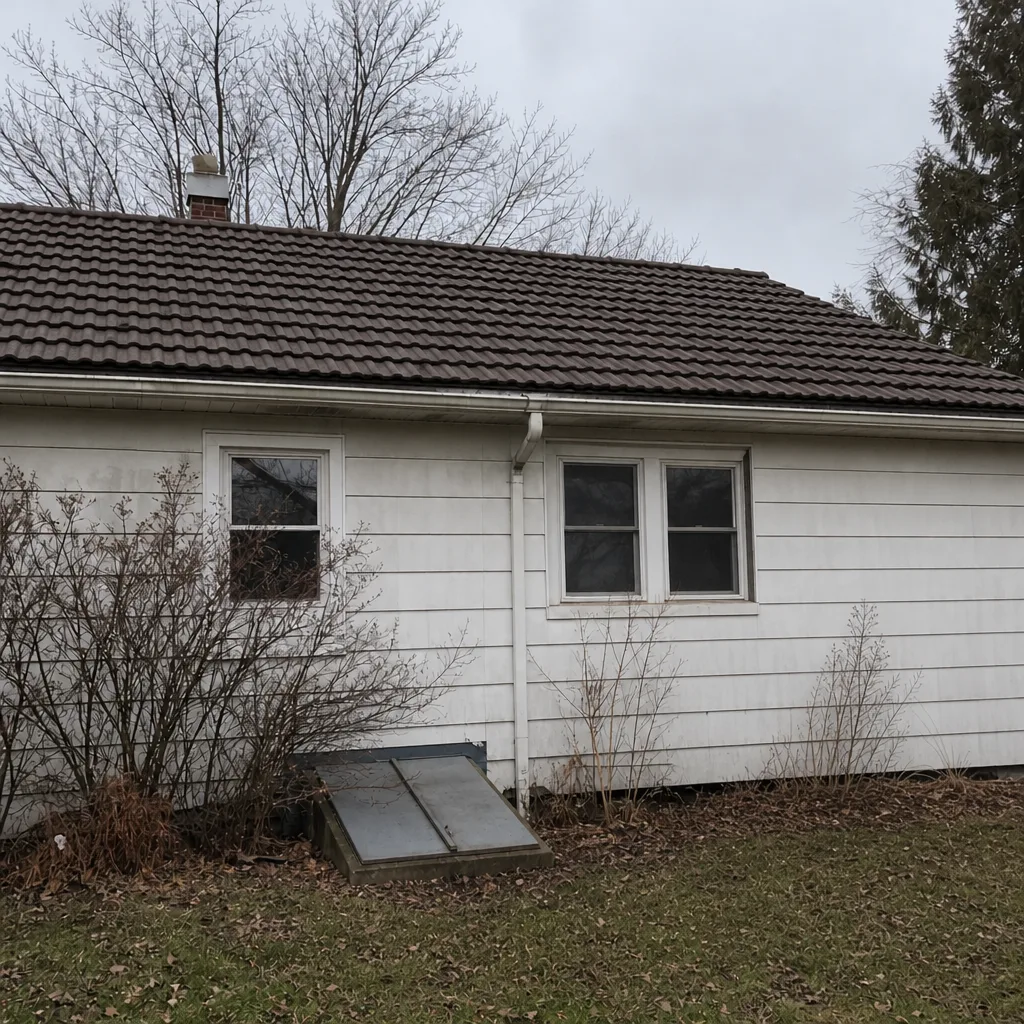 After
When to Call a Professional
Call a professional when any of these apply: the roof is above one story, the pitch is steep, the decking under the damaged area is soft or showing water damage, the leak is anywhere near a chimney, skylight, or valley, or the damage spans more than a handful of shingles. Call when you’re uncertain about the temperature window and the forecast makes you uneasy. Call when a permit is required for the scope of work. Call when you’re selling the house and want documentation that the roof is sound. Call when the roof is over ten to fifteen years old and you’re not sure whether repair still makes sense. Also call when your insurer or an inspector has flagged the roof, since those reports often come with deadlines attached.
The most common mistake is waiting too long to get an assessment. Water intrusions in Syracuse roofs tend to be small at first and expensive by the second winter. Stratford Roof Repair offers free estimates in Syracuse, and we’ll tell you honestly if a repair is the right call. Call (844) 834-3413 to schedule yours.
Frequently Asked Questions
You can, but the timing constraints in Syracuse make it harder than it looks. Shingle self-seal strips require temperatures consistently above the manufacturer minimum to activate, and our shoulder seasons swing from warm afternoons into near-freezing nights. A DIY install that misses the window produces a roof that looks fine but doesn’t seal. For small repairs, DIY is reasonable. For a full roof section or replacement, professional installation is the lower-risk choice. Call (844) 834-3413 for a free estimate if you’re weighing both options.
In most cases, yes. Shingle warranties typically require professional installation by a licensed contractor, and that term appears across the industry, not just with one brand. If you install the shingles yourself, the manufacturer’s material warranty usually lapses even if your work was correct. Workmanship warranties are a completely separate layer of protection and only come from the contractor who performs the install. Call (844) 834-3413 to understand the warranty process before you commit to a DIY plan.
Professional roofing costs more on paper, but the gap narrows once you include tool rentals, disposal, waste factor, permit costs, and the risk of remediation if the work fails. A full roof on a typical Syracuse home is a multi-week project for a solo homeowner, and the weather exposure over that stretch is the real added cost. A free written estimate from a roofer costs nothing and lets you put both numbers side by side. Call (844) 834-3413 to schedule one.
Usually yes, and the exact rule depends on the municipality, so check with your local building department before you buy material. The permit comes with an inspection that verifies the deck, flashing, ice barrier, and fastening, which are the details most likely to be missed. Unpermitted work can complicate a home sale and draw extra scrutiny on an insurance claim. We pull permits as part of replacement work. Call (844) 834-3413 for a free estimate that includes the permit scope.
Pipe boot replacement, ridge cap repair on accessible low-slope roofs, single-course shingle replacement using matching material, and gutter cleaning are all reasonable DIY work on a one-story home where ladder access is safe. Anything requiring you to pull up a full slope, replace decking, or work on a steep pitch is not. Flashing around a chimney, skylight, or valley is also better left to a roofer – those details fail in ways that are hard to spot until water damage shows up inside. Call (844) 834-3413 if you want a professional opinion on whether your project is in the DIY range.
That’s exactly what an inspection determines. A roof with sound decking, intact underlayment, and a localized leak is usually repairable. A roof that has lost the ice barrier, has soft decking under multiple slopes, or is showing widespread granular loss is usually a replacement candidate. Getting a professional assessment before committing to a plan is the way to avoid paying for a replacement when a repair would hold. Call (844) 834-3413 to schedule a free inspection and estimate.
The Bottom Line
The DIY vs pro question for roofing in Syracuse is less about whether you can nail on a shingle than whether the work will be installed inside the temperature and adhesion windows that determine whether the roof seals. Small repairs, pipe boots, ridge cap, and single-course replacements are reasonable to do yourself if you’re safe on a ladder and the decking is sound. Full roof sections, decking work, flashing around penetrations, and anything requiring a permit are better handled by a licensed roofer, both for warranty validity and for insurance exposure if the work fails. The money you save on DIY labor is real, but so is the number on the other side of the ledger: the manufacturer warranty, the workmanship protection, the permit inspection, and the accountability for a job done right.
If you’d like a straight assessment before you decide, Stratford Roof Repair provides roof inspection, roof repair, and roof replacement as three distinct services, so you don’t have to commit to anything at the first visit. We work across seven shingle manufacturers, which means the recommendation comes from your roof and budget rather than a single supplier. Inspection first, no pressure, no guesswork. Our technicians have up to 15 years of experience on residential roofs around Syracuse. Call (844) 834-3413 to schedule your free estimate. We answer 24/7. Fast dispatch from 7am to 7pm, Sunday through Friday.
Written by the team at Stratford Roof Repair.