
Last updated November 15, 2026
 Metal roofing
 Architectural shingles
 Tile roofing
 GAF
 Owens Corning
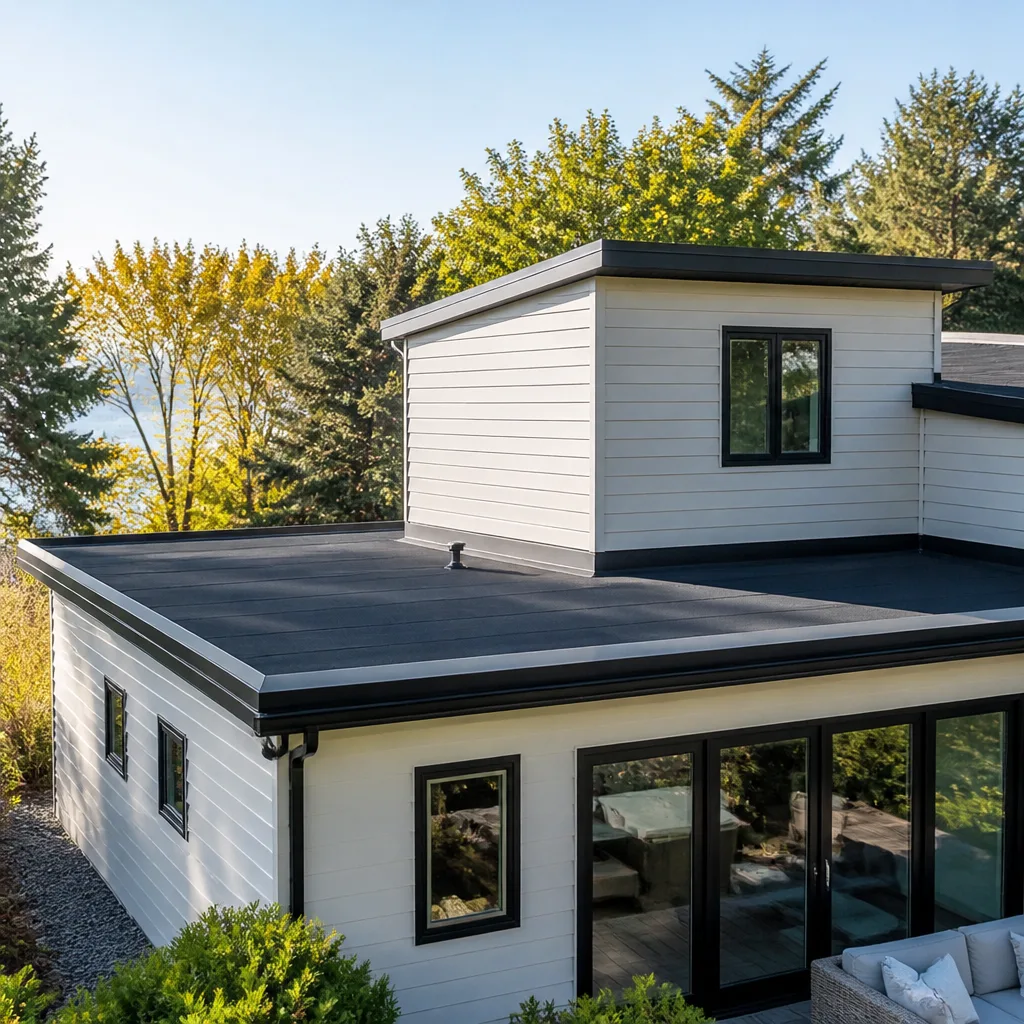 Flat & low-slope
Free roof inspection with deck photos before we talk money - GAF and Owens Corning certified installation
How to Hire a Roofing Contractor in Syracuse: A Step-by-Step Guide
Most homeowners think hiring a roofer comes down to price. It doesn’t. In Syracuse, it comes down to vetting. After a major storm rolls through Central New York, the market fills with out-of-area crews who knock on doors, hand out glossy flyers, and collect deposits before disappearing north or south to the next damaged town. The roofer who gives you the lowest bid today may be the one you can’t reach in 90 days when a ridge vent leaks. This guide walks you through the screening process we wish every homeowner used: how to check a contractor’s registration, what questions actually separate a Syracuse roofer from a passer-through, what a legal contract must include under New York law, and how to structure payments so you keep leverage until the punch list is signed off. You’ll finish knowing exactly what to ask, what to demand in writing, and when to walk away.
Quick Answer
To hire a roofing contractor in Syracuse, verify their New York State Home Improvement Contractor registration, confirm they pull permits through Onondaga County, ask for a written contract that specifies materials, start and completion dates, a milestone payment schedule, and lien waivers, and never pay more than a modest deposit before work begins. Get at least three written estimates and treat same-day pressure to sign as a reason to slow down, not speed up.
Styles & brands we work with
- Architectural shingles
- Metal roofing
- Tile roofing
- GAF
- Owens Corning
- Flat & low-slope
Table of Contents
- Why Hiring a Roofer in Syracuse Is Different
- Step 1: Verify New York State Registration and Insurance
- Step 2: Ask the Questions That Reveal a Local Roofer
- Step 3: Confirm Permit Pulling and Onondaga County Code
- Step 4: Read the Contract Like a Homeowner, Not a Cheerleader
- Step 5: Structure Payments to Keep Leverage
- Step 6: Spot the Storm-Chaser Red Flags
- Step 7: Ask About Winter Installation Protocols
Why Hiring a Roofer in Syracuse Is Different
Syracuse roofs live through a specific combination of stressors that few other markets see. Lake-effect snow loads the structure for months, freeze-thaw cycles open and close seams repeatedly, and the ice dams that form along eaves after a heavy snowfall push water back under shingles where it can sit for weeks. Then summer arrives with wind-driven rain and UV that cooks whatever sealant the previous installer relied on. A roof that would last 25 years in a milder climate often shows real wear sooner here.
That climate shapes what “hiring well” means. A contractor who has never worked through a Syracuse winter doesn’t know the sequence that matters: how long to wait on a tear-off before backing a cold-weather installation, which underlayments hold up below freezing, how to handle ice-and-water shield where the eave gets the most snow. They may also not know your neighborhood’s housing stock, whether it’s the older homes near Syracuse‘s University Hill where decking often needs repair, or the newer subdivisions along the city’s edges where valley flashing is the common trouble spot.
We’ve worked on roofs across the Syracuse area in every season, and the pattern is consistent: homes fail at the edges first. That’s where ice and snow concentrate, and it’s where a rushed install shows up. When you’re vetting a contractor, you’re really checking whether they understand those failure points, not whether their bid has a nice round number on it.
Step 1: Verify New York State Registration and Insurance
New York requires home improvement contractors to register with the Department of State’s Division of Consumer Protection. Registration isn’t a license; it doesn’t test skill or verify workmanship. What it does is create a record you can check, and give you a route to complain if things go wrong. Many out-of-area operators who knock on doors after a storm aren’t registered at all, and they don’t stay long enough to be held responsible.
Here’s how to verify a contractor before you sign anything:
- Ask for the registration number in writing. A real contractor gives it without hesitation. If they say they’re “in the process” of registering, that’s your answer.
- Confirm it’s current. Registration renews on a cycle, and a lapsed number means the contractor is operating outside the rules. The state’s consumer protection division maintains a lookup you can use.
- Ask for proof of general liability insurance. Call the insurer listed on the certificate to confirm the policy is active and matches the contractor’s name. A photocopy alone proves nothing.
- Ask about workers’ compensation coverage. If a crew member is hurt on your property and the contractor has no coverage, the liability can reach you. This is one of the most overlooked checks and one of the most consequential.
- Get it all in writing. Save the registration number, the insurance certificates, and the contractor’s physical business address with your contract paperwork. If there’s ever a dispute, that file is your evidence.
What registration doesn’t cover matters just as much. It doesn’t certify that the contractor installs shingles correctly. It doesn’t guarantee they’ll honor a workmanship claim. It doesn’t rate them against other roofers. So treat registration as a floor, not a ceiling. You still need to check references, inspect past work if you can, and ask the questions in the next section.
Step 2: Ask the Questions That Reveal a Local Roofer
Here’s a simple test. Storm-chasers and part-time operators can talk about shingles. They can’t answer specific questions about the local supply chain, permit history, or installation protocol in a Central New York winter. Those questions expose them quickly. Ask each of these directly during the estimate visit and see how the answer comes back.
- “Which suppliers do you buy from in the Syracuse area?” A local roofer works with regional building supply yards and can name them. A passing crew buys whatever’s on the truck from out of state.
- “Have you pulled permits in Onondaga County before?” The permit process leaves a paper trail. Ask for the contractor’s permit history and confirm it with the town or city code office for your address.
- “What’s your installation protocol when temperatures drop below 40 degrees?” Shingle manufacturers publish cold-weather installation guidance. A contractor who installs through winter needs to know how to seal shingles properly when the adhesive strips won’t bond on their own.
- “Can you walk me through how you handle ice dams?” Any roofer who has worked a Syracuse winter knows the answer. Ice dams are a water-management problem that starts with the roof deck, not a shingle choice.
- “Can I see three recent jobs in neighborhoods I can drive by?” Local contractors have local references you can visit. If the references are all in another county or state, that tells you something.
- “What’s your physical business address?” Not a PO box, not a hotel, not a relative’s house. A real street address you can look up.
The best of these conversations feel like an expert talking shop, not a sales pitch. If a contractor brushes off the winter-installation question with “we just install it right.” or dodges the permit history, you have the answer. Hiring well is a screening problem; these questions do most of the screening for you.
Step 3: Confirm Permit Pulling and Onondaga County Code
Most roof replacements require a permit in Onondaga County, and the specific requirements vary by municipality. The City of Syracuse and each surrounding town runs its own code enforcement office with its own fee schedule and inspection process. What matters for you is that the contractor pulls the permit in their own name and lists you as the property owner. That way the inspection record is public, and the work is documented in the system.
Ask the contractor to provide the permit number once it’s open and to schedule the inspection before final payment. Some municipalities inspect rough work, some inspect at completion, and some do both. In Syracuse’s climate, the inspection is your second set of eyes on flashing, ventilation, and ice-and-water shield placement that you won’t see again once the shingles go on.
A few practical things to check:
- Confirm the permit is posted on-site during the job.
- Make sure the scope on the permit matches what you signed. If it says “repair” but you agreed to full replacement, hold the work.
- Ask who handles the inspection. A contractor who offers to “walk the inspector through it themselves” is fine as long as you get a copy of the signed inspection report.
- If your home is in a historic district or under an HOA, confirm design review requirements before the crew orders material.
Ask your city or town’s building department for the current requirements at your address. That conversation takes ten minutes and prevents the most expensive mistake on the list, which is discovering after completion that the work doesn’t meet code and the permit gets red-tagged. Repairs to a small area often don’t require a permit, but replacements almost always do, so ask before you sign and get the answer in writing.
Step 4: Read the Contract Like a Homeowner, Not a Cheerleader
A legitimate contract in New York is specific. It’s detailed enough that a stranger could read it and know exactly what work will happen, in what order, with what materials, at what price, and on what schedule. If the contract is a single page with a scope like “replace roof” and a lump sum, it’s not a contract. It’s a wish. Move on.
These are the elements every roofing contract should include:
- Full scope of work. What’s being removed, what’s being installed, and what’s staying. Specify the tear-off down to the deck, not just “remove shingles.”
- Materials spec sheet. Brand, product line, color, and quantity for every component: shingles, underlayment, ice-and-water shield, ridge vent, drip edge, fasteners, flashing. If it’s not specified, it can be swapped for a lower grade.
- Manufacturer warranty details. Which warranty applies and what it covers. Some manufacturer warranties require the installer to be certified, so confirm this in writing.
- Workmanship warranty. Terms need to be spelled out in the contract. Don’t rely on a verbal promise.
- Start and completion dates. Real dates, not “weather permitting.” If the roofer can’t give you a window, they don’t have a schedule.
- Payment schedule. Broken out by milestone (see the next section), with deposit amount, progress payments, and final payment tied to completion.
- Lien waiver process. A signed waiver from the contractor and from any subcontractor or material supplier confirming they’ve been paid and won’t file a lien against your home. Get this after every payment, not just at the end.
- Change order process. How changes get approved, in writing, before work proceeds, so nobody surprises you with a bill for rot repair discovered after tear-off.
- Cleanup and disposal. Who hauls away the old material, and what the site looks like when they leave.
Read the whole thing. Even the fine print. The contract protects both of you, and a contractor who’s comfortable with the spec sheet and payment schedule is the one you want. When we install a roof, the material spec sheet comes straight from the manufacturer build sheet so you can verify what went on the house.
Step 5: Structure Payments to Keep Leverage
The purpose of milestone payments is to preserve your leverage until the work is actually done. The most common mistake homeowners make is handing over most of the money at material delivery. Once that happens, a contractor’s incentive to finish the punch list fades. Pay in milestones that keep meaningful money in play until the very end.
A workable structure looks like this:
- Deposit: modest, tied to the material order. Enough to secure the product, not enough to carry the contractor through the whole job.
- Progress payment: after tear-off and deck inspection, once the crew has documented what they found under the old shingles. This is when unexpected rot gets priced and approved in a change order.
- Substantial completion payment: after the roof is installed, before the final inspection is signed off.
- Final payment: after the punch list is complete, the inspection report is signed, and lien waivers from all parties are in hand.
Never pay with cash. Use a credit card or a check made out to the business entity on the contract, never to an individual. If the contractor asks you to write the check to “the project manager,” that’s a red flag. The money should land in a business account, and it should be traceable.
Watch for these payment red flags:
- Large deposit demanded upfront “to secure the material price.”
- Offer to “handle the insurance claim” on your behalf, taking payment directly from your insurer without your involvement.
- Request for the full balance before work begins.
- Insistence on cash, or a check made out to a person not listed on the contract.
- No written change order when extra work is discovered.
Insurance claims are worth a separate word. Your insurer pays the policyholder, which is you. A legitimate contractor will work with your insurer, provide documentation, and help you understand the claim, but they won’t ask you to sign over the payment. If someone offers to “handle everything,” including negotiating with your adjuster or collecting the check, that’s a sign to call your insurance company directly before signing.
Step 6: Spot the Storm-Chaser Red Flags
Storm-chasers are a known problem in the roofing trade after any big weather event, and Central New York sees them after heavy lake-effect snow and wind events. They arrive with out-of-state plates, rent a short-term office, do a burst of jobs, and leave before anyone who paid can find them. The pattern is recognizable once you know what to look for. Check every one of these before signing.
- Same-day pressure to sign. A legitimate roofer gives you time to review the contract. A storm-chaser pushes you to sign during the first visit, often with a “this price is only good today” line.
- Offer to “handle the insurance claim” for you. This is one of the clearest red flags. It can mean letting them negotiate directly with your insurer, or worse, signing over your claim rights. Your insurer works with you, not with them.
- No verifiable physical address. Ask for the street address and look it up on a map. If it’s a hotel, a PO box, or a rental office that turns over every few weeks, walk away.
- No New York State registration. Verify the number. Out-of-state contractors often don’t hold one.
- No local references. Storm-chasers can’t give you three homeowners in your neighborhood who’ve used them, because they don’t have any.
- Door hangers or flyers with a generic logo and a phone number, no address. Real local roofers don’t distribute marketing like that after a storm.
- Pressure to “get you on the schedule before it fills up.” A busy roofer is fine; a roofer who’s frantic about filling slots on the day after a storm is filling slots before they leave.
- Unmarked vehicles, no signage on the crew. Not decisive on its own, but combined with the other signals it completes the picture.
The vetting question that catches storm-chasers fastest is this: “Can you walk me through your permit history in Onondaga County?” A local roofer has an answer. A storm-chaser has a story. Another fast one: “Which local suppliers do you buy from here?” Same result.
Step 7: Ask About Winter Installation Protocols
Syracuse’s roofing season doesn’t stop in October. Roofs get replaced through the winter, and the quality of the install in cold weather depends on whether the contractor follows manufacturer guidance or rushes through. Shingles rely on a heat-activated adhesive strip along the bottom edge. Below roughly 40 degrees Fahrenheit, that strip doesn’t bond on its own. A responsible installer handles this with hand-sealing, warm-weather product handling, and careful attention to the underlayment choice for cold conditions.
Ask these questions specifically:
- How do you seal shingles when temperatures drop? The answer should mention hand-sealing, warm storage for the shingle bundles, or both.
- Which underlayment do you use in cold weather? Some synthetic underlayments perform far better in cold conditions than traditional felt. A local roofer will have a specific product they trust.
- How long do you wait between tear-off and install in winter? Exposed deck in freezing weather is a window for moisture problems. The shorter the exposure, the better.
- What happens if it snows mid-job? The contractor should have a plan for temporary water protection, not an improvisation.
This question matters in Syracuse more than in almost any other market. When we install through the colder months, that protocol isn’t optional. It’s the difference between a roof that holds through the first freeze-thaw cycle and one that starts shedding shingles in February. If a contractor can’t explain cold-weather installation in specific detail, don’t let them on your roof in winter.
Common Mistakes to Avoid
- Accepting the lowest bid. The cheapest bid usually means lower-grade materials, skipped underlayment steps, or a crew working too fast. A bid $3,000 below the others is more likely to identify the lowest-quality install than the best deal.
- Paying too much upfront. A deposit should secure the material order, not carry the contractor through the whole job. If you hand over most of the money at the start, you have no leverage if the punch list drags.
- Signing a scope-free contract. “Replace roof, $18,000” isn’t a contract. Without a material spec sheet, you can’t verify what went on the roof, and you can’t compare bids fairly.
- Skipping the permit. Unpermitted work can complicate a future home sale in Onondaga County, and it leaves you without an inspection record. Insist the permit is pulled in the contractor’s name.
- Believing the door-knocker. After every major storm in Syracuse, out-of-area crews knock on doors. Verify registration, ask the local-supplier question, and confirm a street address before any conversation goes further.
- Not asking about winter installation. Roofs get replaced year-round here. If the contractor can’t explain how shingles seal in cold weather, find one who can.
- Signing over the insurance check. The policy pays you, not the contractor. Keep yourself in the middle of the claim and don’t allow anyone to negotiate with your insurer on your behalf.
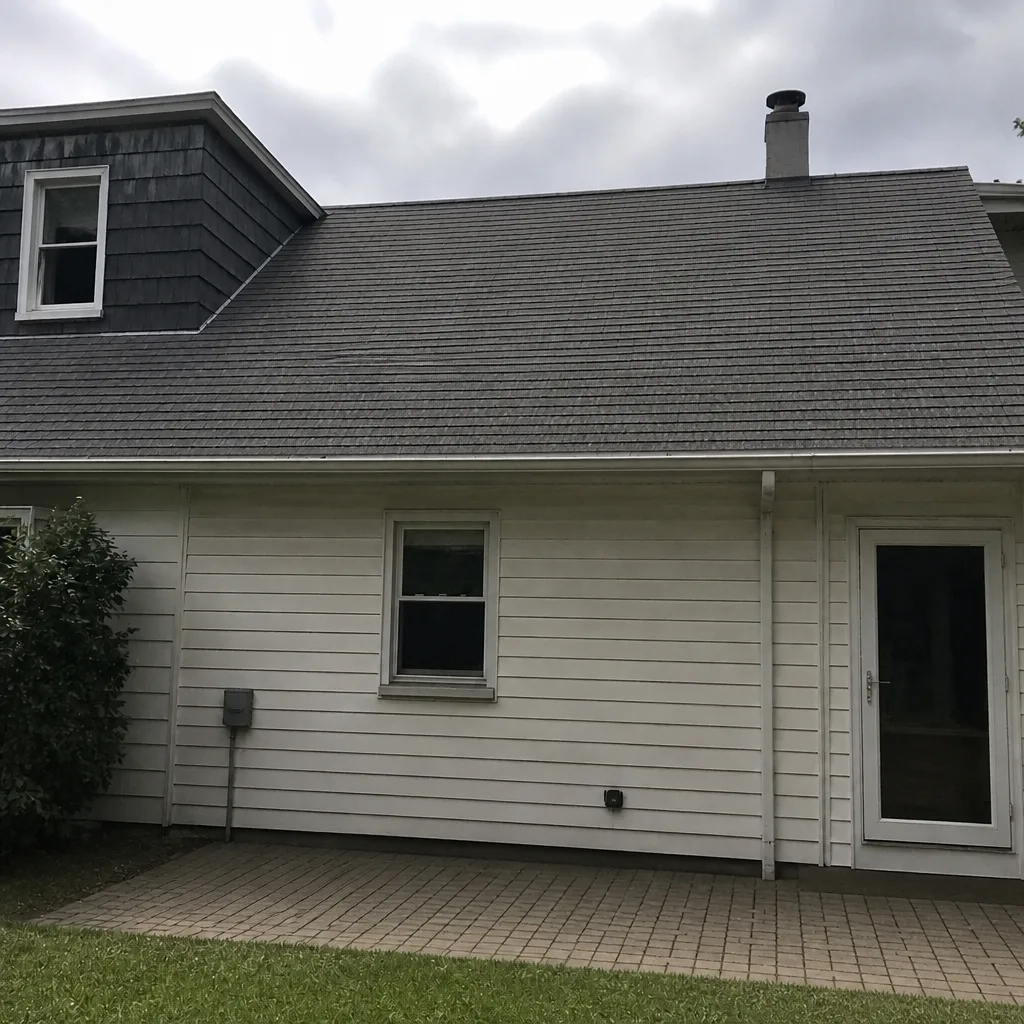
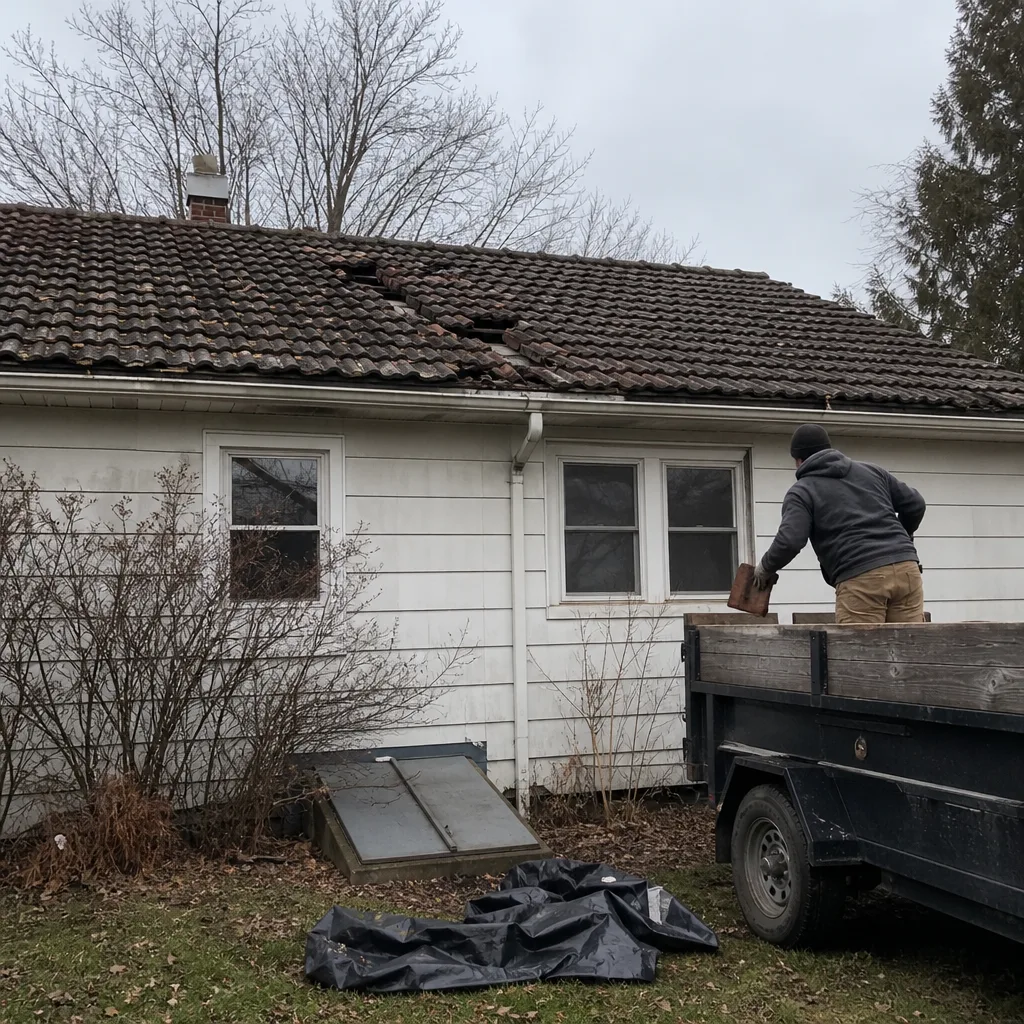
See the difference
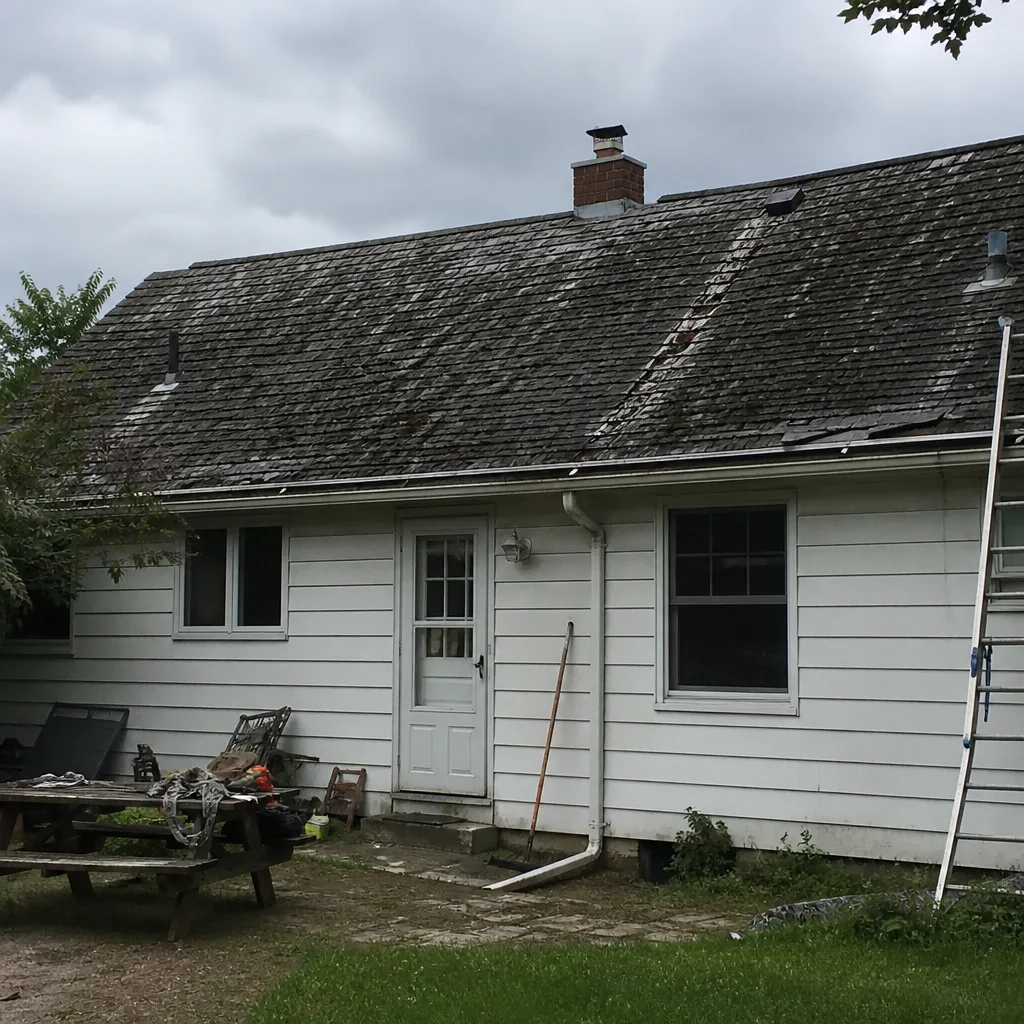 Before
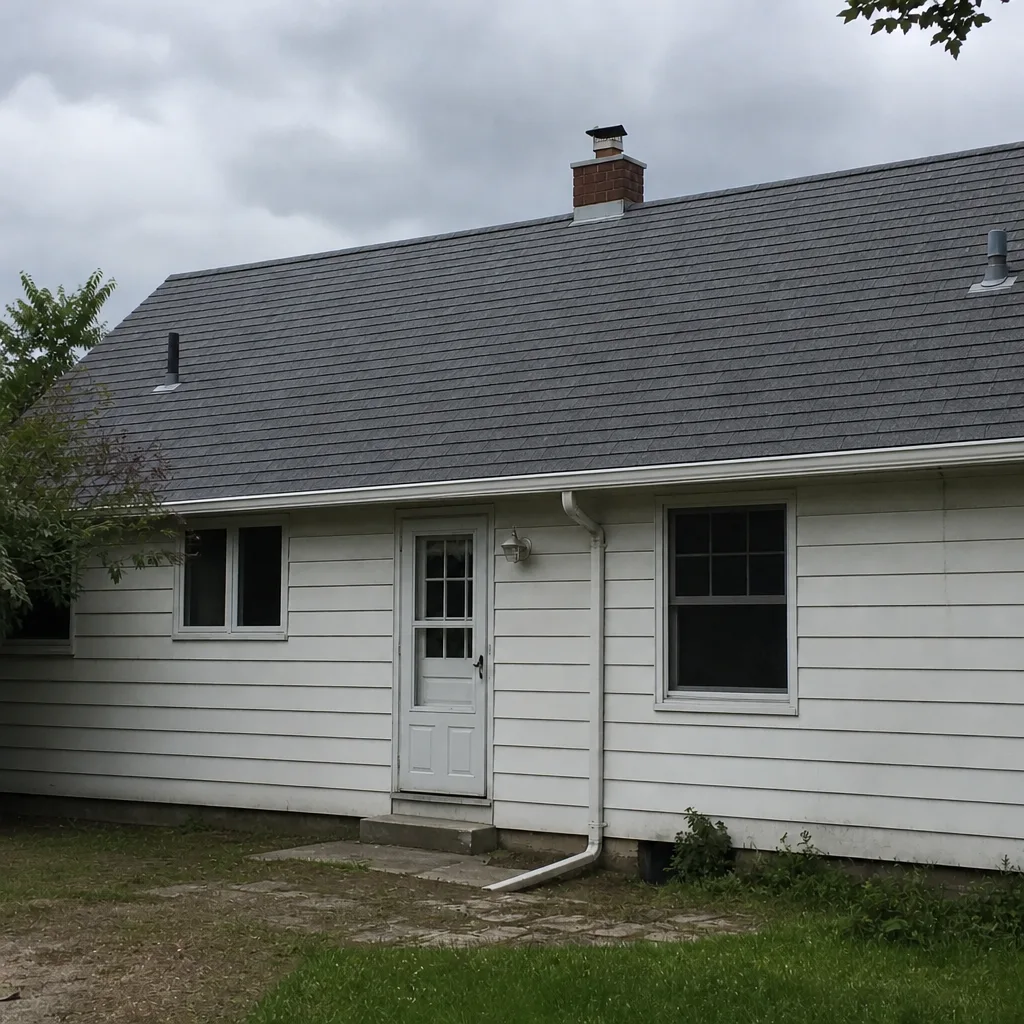 After
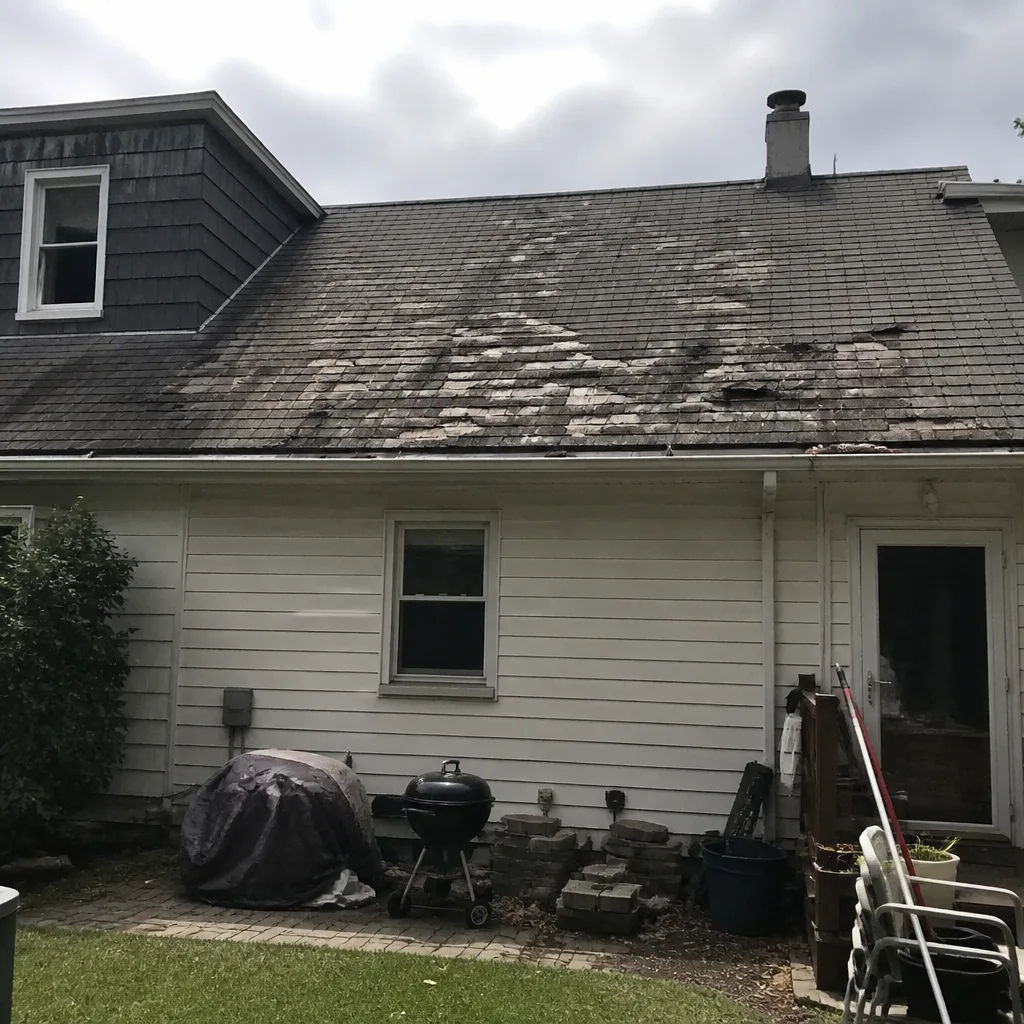 Before
 After
 Before
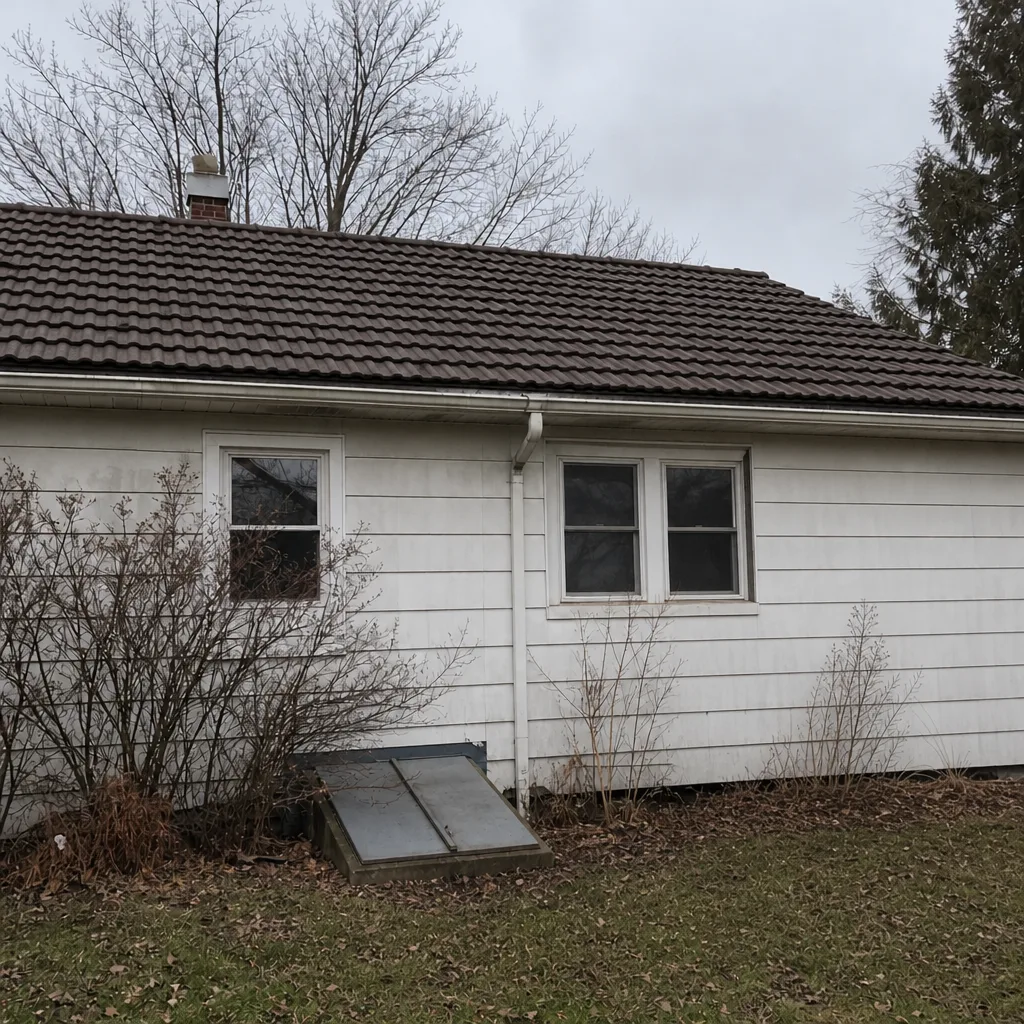 After
When to Call a Professional
Some roof problems are obvious enough to handle as DIY maintenance: a missing gutter clip, a loose downspout, a couple of granules in the driveway. Most aren’t. Call a professional when you see any of the following: an active leak during rain or snowmelt, water stains on a ceiling or along a wall, missing or lifted shingles after a wind event, ice dams that recur every winter in the same spot, or visible sagging along the roof deck or eaves. Roof work also involves heights and, on older Syracuse homes, the risk of structural issues you can’t see from the ground. Repairing the wrong layer or sealing over a water path that hasn’t been resolved almost always costs more than diagnosing it early.
If you aren’t sure whether your roof needs repair or full replacement, a standalone inspection answers that question without a commitment. Stratford Roof Repair treats inspection as its own service: no pressure to buy anything, just a written report on the roof’s condition and a clear recommendation. We’ll tell you if a repair will hold, and we’ll tell you when it won’t. Stratford Roof Repair offers free estimates in Syracuse. Call (844) 834-3413 to schedule one.
Frequently Asked Questions
Most roof replacements require a permit, and the specific requirements vary by municipality across Onondaga County. Confirm with your city or town’s building department for your specific address before the contract is signed. A legitimate contractor pulls the permit in their own name, posts it on-site, and schedules the inspection.
Roof replacement in Syracuse typically runs in a range driven by size, pitch, number of layers being removed, and material tier; a written line-item estimate is the only number that matters for your house. Expect the estimate to specify brand, product line, and quantity for every component, and to call out what’s included in tear-off and disposal. Call (844) 834-3413 for a free estimate.
Not unless the scope changes. Reputable contracts include a written change-order process, and any surprise discovered after tear-off (rot, damaged decking, undersized flashing) gets priced and approved before work continues. If your contractor can’t explain how change orders get handled, the price isn’t locked, whatever the contract says.
Ask three questions: which regional building suppliers they buy from, which permits they’ve pulled in Onondaga County recently, and what their installation protocol is when temperatures drop below 40 degrees. A local roofer has specific answers to all three. A storm-chaser doesn’t.
Registration with the Department of State’s Division of Consumer Protection gives you a verifiable record and a route to complain if things go wrong, but it doesn’t test or certify roofing skill. Treat it as a minimum screening check alongside insurance verification and references, not as a substitute for them.
Say no and call your insurance company directly. Your policy pays you, not the contractor, and letting someone else negotiate with your insurer or take the payment check is a red flag. A legitimate roofer will help document the damage and work with your insurer without asking you to sign anything over. For an independent assessment, call (844) 834-3413.
The Bottom Line
Hiring a roofing contractor in Syracuse is a screening problem, not a shopping problem. Verify New York State registration, confirm insurance, ask the local-supplier and permit-history questions that expose storm-chasers, read the contract closely, and structure payments so you keep leverage until the punch list is signed. The roof over your home is only as good as the install underneath it, and the install is only as good as the contractor behind the paperwork. Don’t rush the vetting, especially in the weeks after a major storm. Repair when it makes sense. Replace when it’s necessary. Either way, get a written estimate before the first shingle moves.
Stratford Roof Repair handles roof repair, roof replacement, and standalone inspection across the Syracuse area. Our technicians have up to 15 years of experience, and our material selection spans seven shingle manufacturers including CertainTeed, Owens Corning, IKO, and Atlas, so recommendations follow your budget and your roof’s conditions rather than a single brand. Inspection first. No pressure, no guesswork.
Call (844) 834-3413 for a free estimate. We answer 24/7. Fast dispatch from 7am to 7pm, Sunday through Friday.
Written by the team at Stratford Roof Repair.