
Last updated November 15, 2026
 Architectural shingles
 Metal roofing
 Tile roofing
 GAF
 Owens Corning
 Flat & low-slope
Free roof inspection with deck photos before we talk money - GAF and Owens Corning certified installation
Roof Repair Maintenance Checklist for Syracuse Homeowners
The most expensive roofing call we get every spring isn’t from storm damage. It’s from homeowners who skipped a twenty-minute gutter clear in November and paid for it with a rotted fascia board and water-stained ceilings by March. That’s the thing about Syracuse roofs: they don’t fail all at once. They fail in sequence, and the sequence starts long before you see a stain. This guide walks through that failure chain month by month, so you know what to clear, what to photograph, and when to call, before a small problem compounds into a big one.
Quick Answer
A Syracuse roof needs three checkpoints a year: a late-fall gutter and flashing pass before the first hard freeze, a mid-winter check after ice builds, and a spring granule and sealant review after the thaw. Between those, a ground-level look with binoculars after any wind event catches most problems early. The tasks themselves are simple; the timing is what protects your roof.
Styles & brands we work with
- Architectural shingles
- Metal roofing
- Tile roofing
- GAF
- Owens Corning
- Flat & low-slope
Table of Contents
- Why Syracuse Roofs Fail in a Specific Order
- The Month-by-Month Maintenance Calendar
- The Gutters-to-Ice-Dam Chain and What to Clear Before November
- How to Do a Safe Ground-Level Inspection With Binoculars
- Flashing Points That Fail First in Syracuse
- What to Photograph Each Cycle for an Accurate Estimate
- Repair or Replace: Reading the Signs
- Common Mistakes to Avoid
Why Syracuse Roofs Fail in a Specific Order
Freeze-thaw cycling is the single biggest stressor on a roof in Syracuse, and it doesn’t hit every component equally. Water gets into a small gap during a warm afternoon, then expands as it refreezes overnight. That cycle repeats dozens of times through a typical winter. The parts of your roof that hold water longest and drain slowest fail first, which is why the order is predictable.
Here’s the sequence, roughly:
- Gutters and downspouts clog with leaves and grit from aging shingles. Water backs up under the bottom course.
- Ice dams form at the eaves because that backed-up water can’t drain. Meltwater wicks under shingles and into the deck.
- Flashing seals crack at chimney saddles, pipe boots, and valley seams as the metal expands and contracts against the roof.
- Fascia and soffit rot as water sits against the wood behind the gutter.
- Ceiling stains appear indoors, often weeks after the actual breach.
Notice that the indoor symptom shows up last. By the time a homeowner in Syracuse sees a water ring on the ceiling, the roof has been leaking for a while. That’s why a maintenance rhythm matters more than a repair budget. The Stratford Roof Repair approach is inspection first, because a trained eye can catch step two or three before it becomes step five.
Some neighborhoods see this faster than others. Older homes around the Westcott and University areas, many with steep pitches and original plank decking, tend to show flashing failure sooner than newer construction on the city’s edges. It’s not the age of the roof alone; it’s how the water moves off it.
The Month-by-Month Maintenance Calendar
Generic checklists split the year into “spring” and “fall.” That doesn’t match how weather actually arrives in Syracuse, where a warm stretch in late February can trigger a melt-and-refreeze cycle weeks before anything resembling spring. This calendar is built around the real transitions.
October (before the first hard freeze)
- Clear gutters and downspouts completely. This is the most important task of the year.
- Check that downspouts discharge well away from the foundation.
- Look at flashing seals while the weather is still workable.
November (as temperatures drop)
- Confirm attic ventilation is open. Blocked soffit vents trap warm air that fuels ice dams.
- Do a binocular pass from the ground for loose or lifted shingles.
December through February (mid-winter)
- After any ice buildup at the eaves, note where it forms. Recurring spots point to a ventilation or insulation problem, not just bad luck.
- Watch the ceilings in upper rooms after a thaw for new discoloration.
March through April (the thaw)
- Inspect gutters again. Winter grit and granule loss from shingles collects heavily here.
- Look for granule piles at downspout outlets (more on what this means below).
- Ground-level review of sealant around flashing.
May through September (the maintenance window)
- This is when most actual repair work gets done, because conditions are dry and materials bond properly.
- Schedule a professional inspection if you’ve noted anything during the year.
If you want a single rule to remember: everything that needs clearing should be cleared before the first freeze, and everything that needs inspecting should be inspected after the last one.
The Gutters-to-Ice-Dam Chain and What to Clear Before November
Here’s the mechanism most homeowners miss. A clogged gutter doesn’t just overflow. It holds a column of water against the bottom edge of the roof. When temperatures drop, that water freezes and expands under the shingle tabs. The next warm spell melts it, the water wicks inward, and refreezes at night. This is the start of an ice dam, and it happens at the eaves long before you see icicles.
So what exactly do you clear? All of it, in this order:
- The gutter channel itself from end to end. Not just where you can see leaves from the ground.
- The downspout, using a hose or plumber’s snake if water doesn’t drain. A clear gutter feeding a clogged downspout still backs up.
- The roof surface just above the gutter, particularly in valleys where debris collects. A soft brush, never a pressure washer, which damages shingle granules.
- The discharge point at the base of each downspout, so meltwater moves away from the foundation instead of pooling against the sill.
The deadline is the first hard freeze, which in Syracuse reliably arrives in November. Clearing in late October gives you margin. Waiting until December is what turns a gutter job into a fascia repair.
And if you notice the fascia board behind the gutter is soft, stained, or separating, that’s a signal it’s time for roof repair, not another gutter clear. Water sitting against wood does quiet damage, and it’s easier to fix early.
How to Do a Safe Ground-Level Inspection With Binoculars
You don’t need to climb onto your roof to catch most problems, and we’d rather you didn’t. A walk around the perimeter with a decent pair of binoculars tells you a lot. Do this on a dry, overcast day, since harsh sun flattens the contrast on shingles.
What to look at, systematically:
- Shingle lines: Are the rows straight, or is there a crooked or lifted patch? Lifted tabs mean sealant has failed.
- Missing or broken shingles: Note the location by referring to a fixed landmark (the chimney, a particular downspout, a dormer). You’ll need this for documentation.
- Granule texture: Bare, sandpaper-looking patches on shingles indicate that protective granule layer is worn through. That shingle has little life left.
- Flashing: Look at the metal around the chimney, the pipes, and the valleys. Rust streaks or visible gaps are worth noting.
- Gutter edges: Sagging or separated gutters pull away from the fascia and open a path for water.
Now, the granule question, since it’s one of the most useful signals. Shingles shed granules as they age, and that grit washes into your gutters and downspouts. If you find a small amount at the bottom of a downspout after a heavy rain, that’s normal wear. If you find a thick accumulation, or if you can see bare asphalt patches on the shingles themselves, your roof is in its later years and a professional inspection makes sense. That single observation, done from the ground, tells you more about shingle age than almost anything else.
Write down what you see, not just that you saw “some issues.” Specific notes make a repair estimate faster and cheaper to produce. If you’re not sure what you’re looking at, a standalone roof inspection is a low-stakes way to get a clear answer.
Flashing Points That Fail First in Syracuse
Flashing is the metal that seals the vulnerable seams where your roof meets anything else. It’s also where a striking number of leaks begin, because it takes the brunt of freeze-thaw movement. Three spots in particular.
Chimney saddles
A chimney saddle is the small peaked ridge of roofing on the uphill side of a chimney that sheds water around it. It’s a high-stress area, and the sealant there cracks first because it moves with the freeze-thaw cycle. Look for missing or crumbling sealant where the saddle meets the chimney, and for rust on the metal itself.
Pipe boots
Every plumbing vent that exits your roof has a rubber or lead boot around it. The rubber ones dry out and split with age, especially after repeated winters. A split boot is a small, inexpensive repair that becomes a ceiling stain if ignored. From the ground, look for a boot that’s dried, cracked, or sitting crooked.
Valley metal
Roof valleys channel the most water. Where two planes meet, the metal underneath the shingles takes a constant beating, and the freeze-thaw action can open seams. Look for rust streaks or a visible gap along the valley line.
Sealant lifespan around flashing is the thing people underestimate. In a climate with this many freeze-thaw cycles, the caulk around a flashing joint doesn’t last forever. That’s not a defect; it’s just maintenance. Checking these spots each fall, and resealing when they fail, is what keeps small gaps from becoming structural. Our technicians have up to 15 years of experience reading these failures, and the metal-first pattern is one we see everywhere in Syracuse.
What to Photograph Each Cycle for an Accurate Estimate
If you ever need a repair estimate, the best thing you can bring to that conversation is a record of what you’ve seen over time. It turns “the roof might be leaking somewhere” into a specific, evidence-based conversation. It also helps a contractor distinguish a one-off issue from a pattern.
Here’s what to capture each cycle, ideally from the ground:
- Wide shots of each roof plane so the overall layout is clear.
- Close-ups of any damage you spot, taken at your phone’s best zoom. Include the surrounding area so the location is obvious.
- The flashing points: chimney, boots, and valleys.
- Gutter interiors and downspout outlets, showing any granule buildup.
- Interior ceiling and wall spots if you’ve noticed any staining.
Date your photos. A single image of a lifted shingle tells a contractor less than a series showing it was fine in October and lifted by March. That timeline is a useful diagnostic tool, and it helps you avoid paying for a full roof walk just to get an estimate. A photo-documented repair visit is faster to scope and often cheaper to quote accurately.
Pair the photos with a short written log: date, what you observed, what the weather had done recently. Keep it somewhere you’ll remember. It’s a five-minute habit that pays off over a decade.
Repair or Replace: Reading the Signs
The repair-versus-replace question is where most homeowners want a straight answer, because it’s where overselling can happen. Here’s the honest framing.
Signs a repair still makes sense:
- Damage is localized to one area or a few flashing points.
- Shingles are otherwise intact with granules present.
- The roof is on the earlier side of its lifespan.
- The leak traces to a specific, fixable seal.
Signs replacement is worth discussing:
- Shingles across multiple planes are bare and shedding heavily.
- There are multiple leaks in unrelated spots.
- Frequent repairs have started to add up.
- The deck underneath is soft or visibly water-damaged.
What you put back matters as much as whether you repair or replace. Because we install across seven manufacturers, including GAF, CertainTeed, and Owens Corning, the recommendation we make is driven by your budget and your roof’s conditions, not by which brand a salesperson was incentivized to push. Entry-level lines and premium lines across different brands behave differently on a Syracuse roof, and we’ll explain which fits your situation. If replacement is the path, our roof replacement process starts with a full inspection so nothing gets skipped.
The key point: we’ll tell you if a repair will hold, and we’ll tell you when it won’t. Replacement only makes sense when repair isn’t a sound long-term solution.
Common Mistakes to Avoid
- Skipping the November gutter clear. It’s the single most preventable cause of ice dams and fascia rot. Twenty minutes in the fall saves weeks of aggravation in the spring.
- Pressure washing the shingles. It strips granules, the shingle’s protective layer, and accelerates their aging. Use a soft brush and a hose, never a pressure washer.
- Patching in cold weather. Sealants and adhesives don’t bond properly below a certain temperature. A cold-weather patch often fails, which is why most repair work waits for warmer months.
- Ignoring a small interior stain. A ceiling water spot in Syracuse is usually the last symptom in a chain that started months earlier. Treat it as a prompt to inspect, not a cosmetic issue.
- Sealing over flood vents and soffits. Blocking attic ventilation traps warm air and creates the ice dams you’re trying to prevent. Ventilation has to stay open.
- Climbing up to check things yourself in winter. Ice and steep pitches are how homeowners get hurt. The binocular method from the ground catches nearly everything.
- Accepting a replacement recommendation without an inspection. A legitimate contractor inspects before recommending replacement. If someone skips that step, get a second opinion.
See the difference
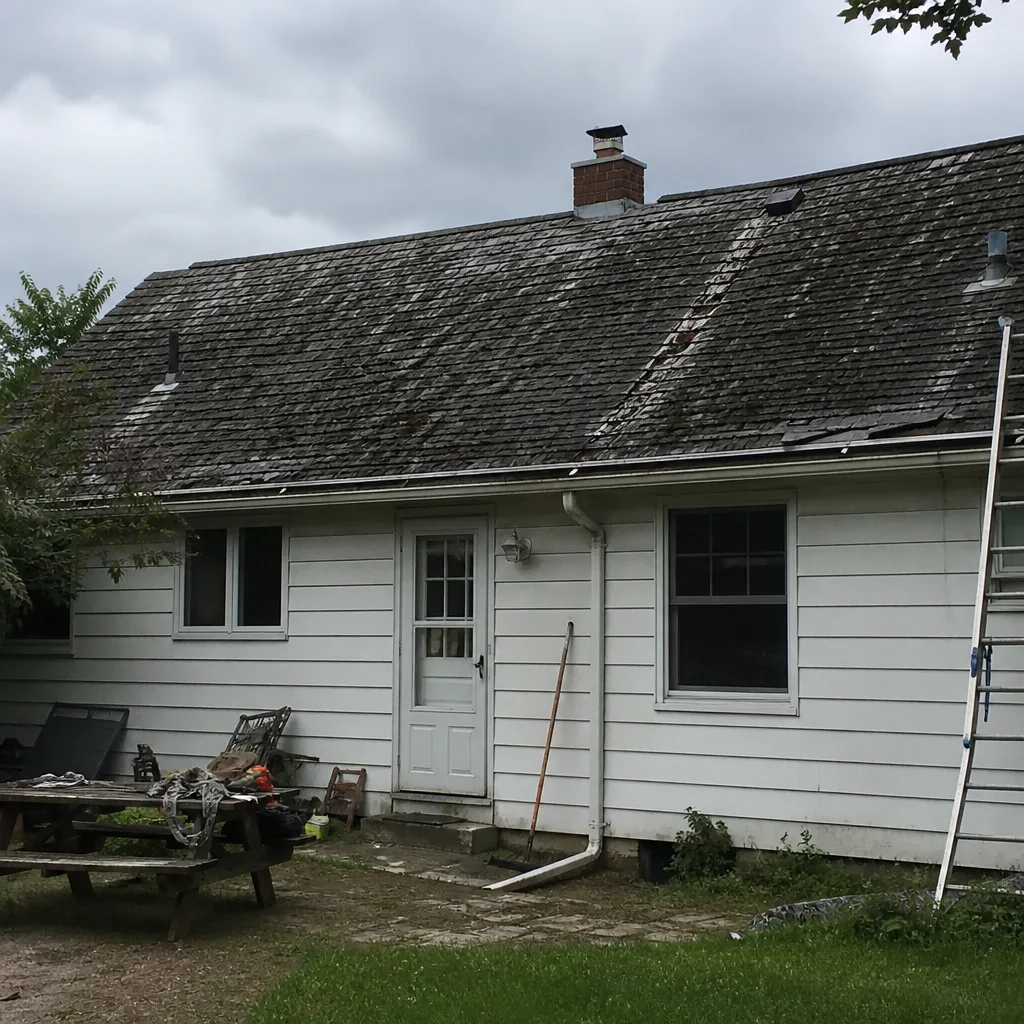 Before
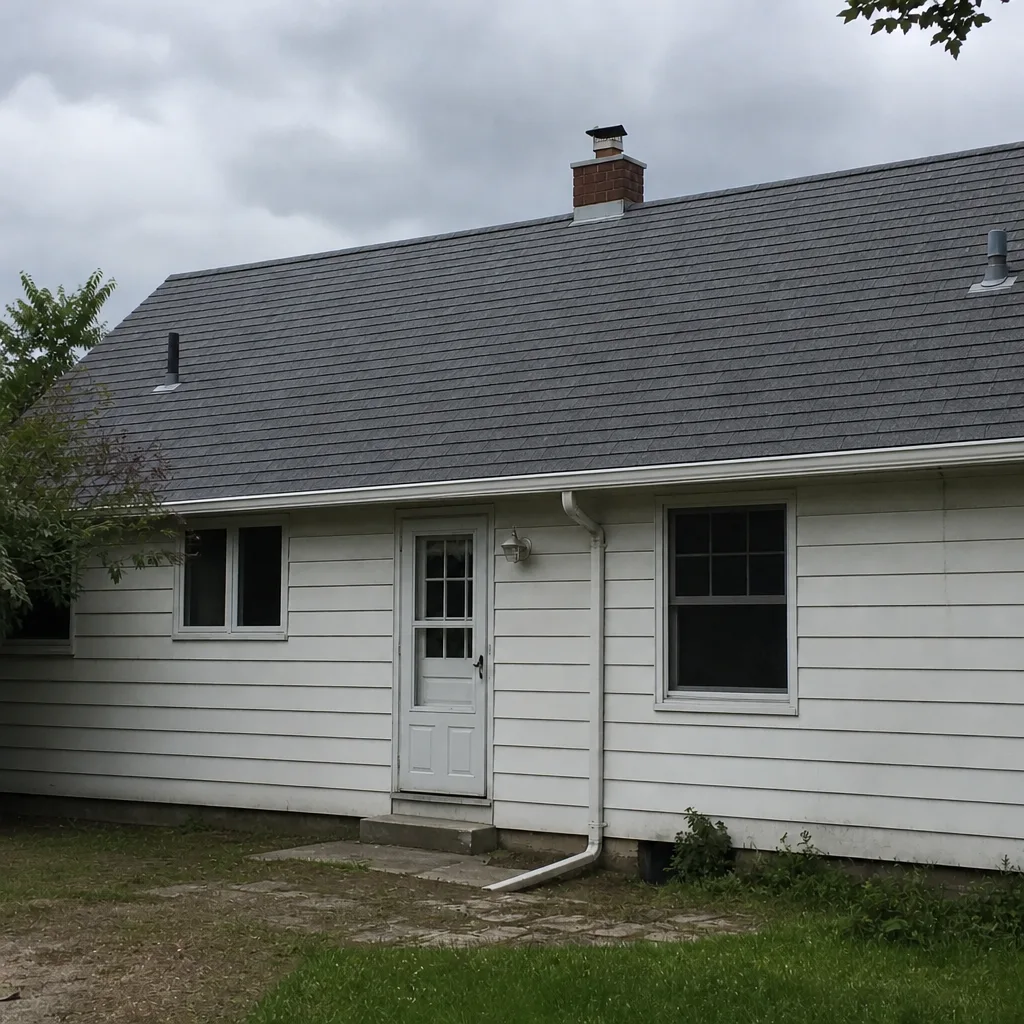 After
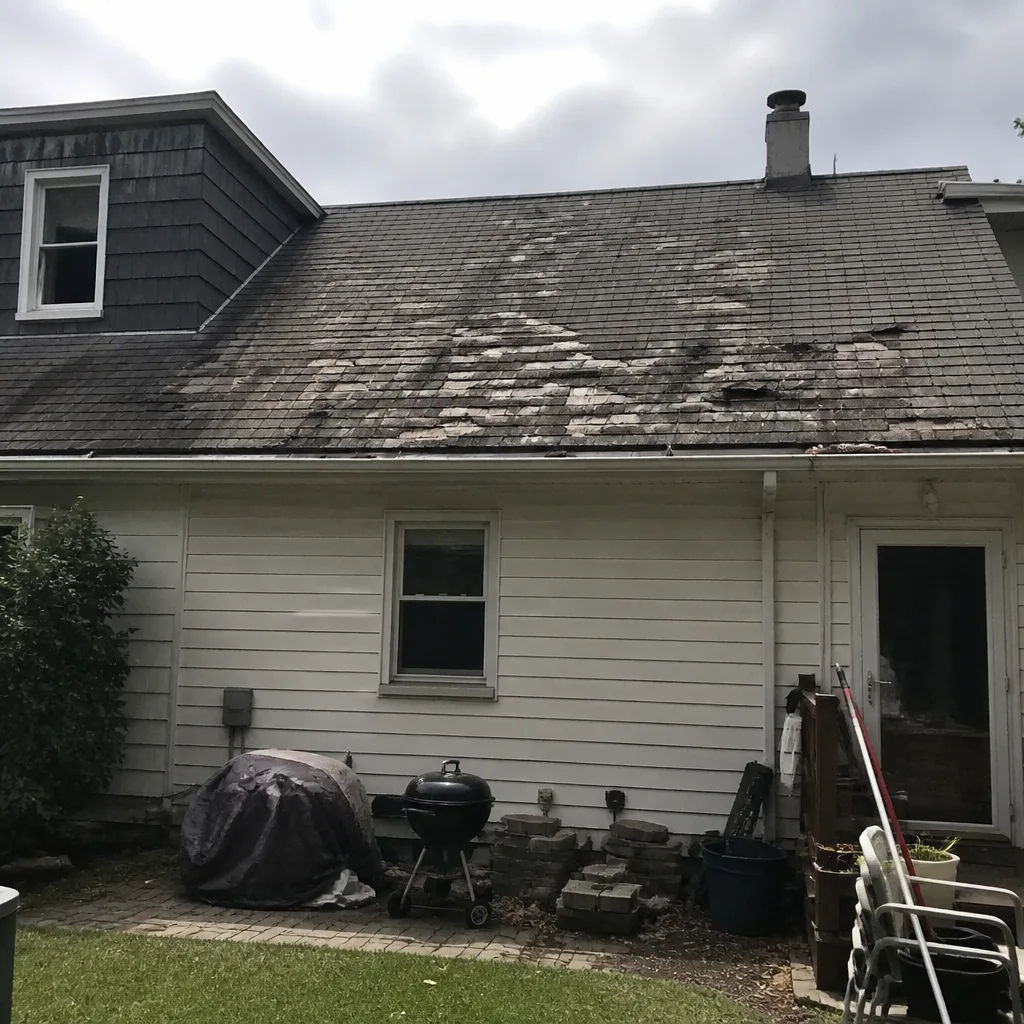 Before
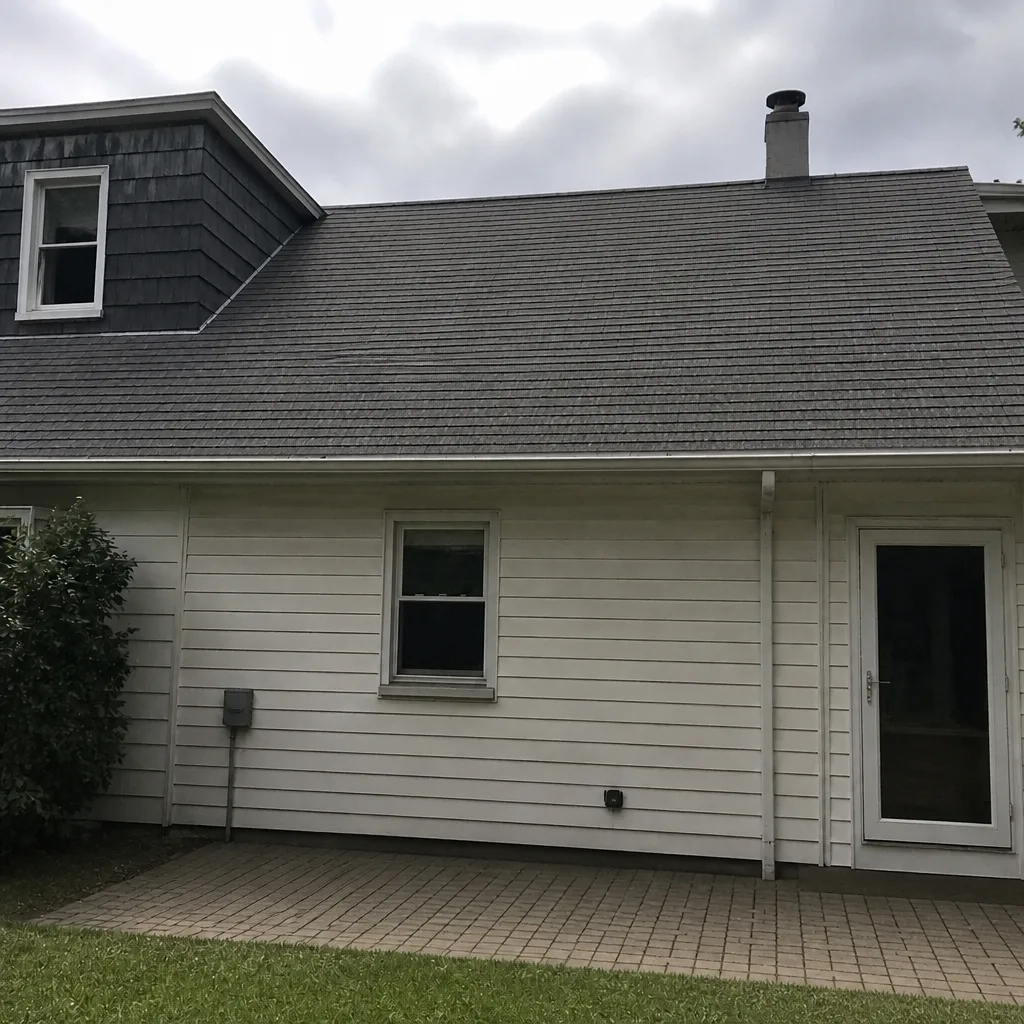 After
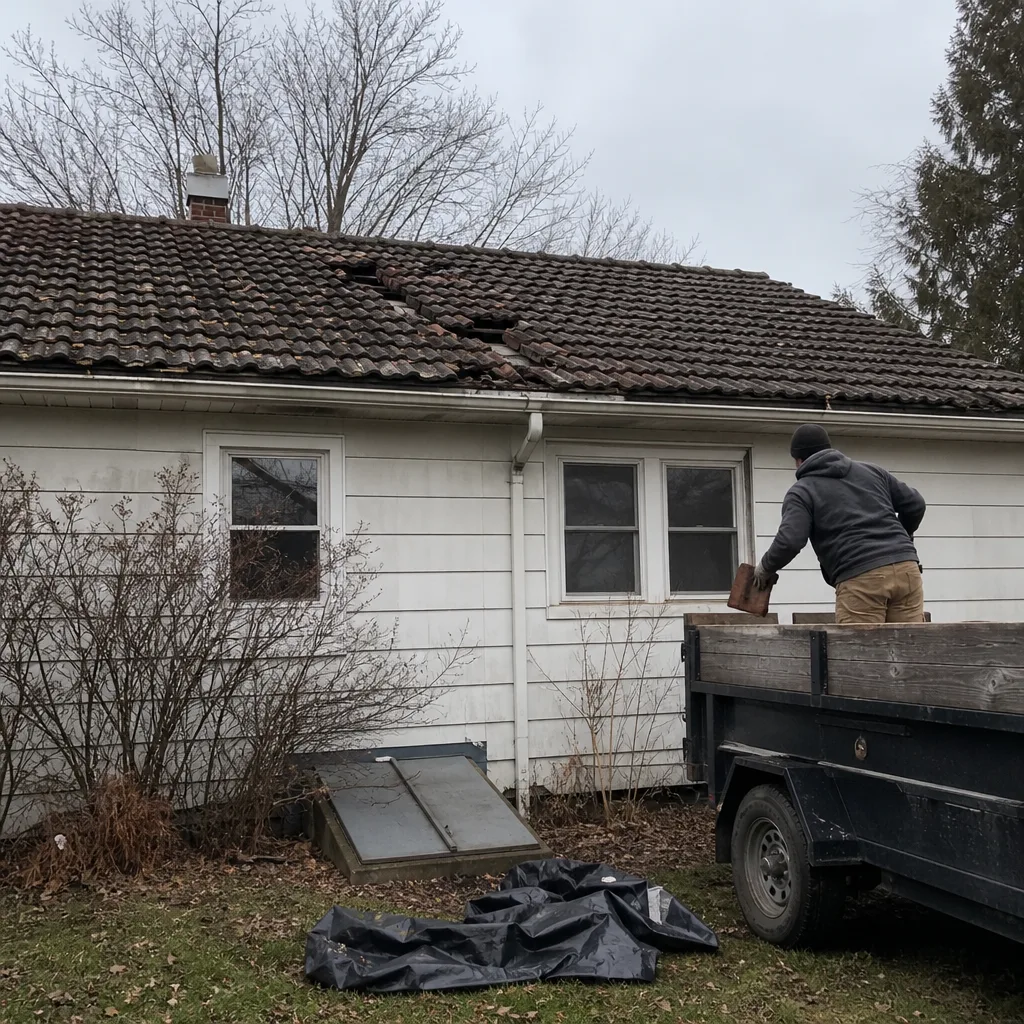 Before
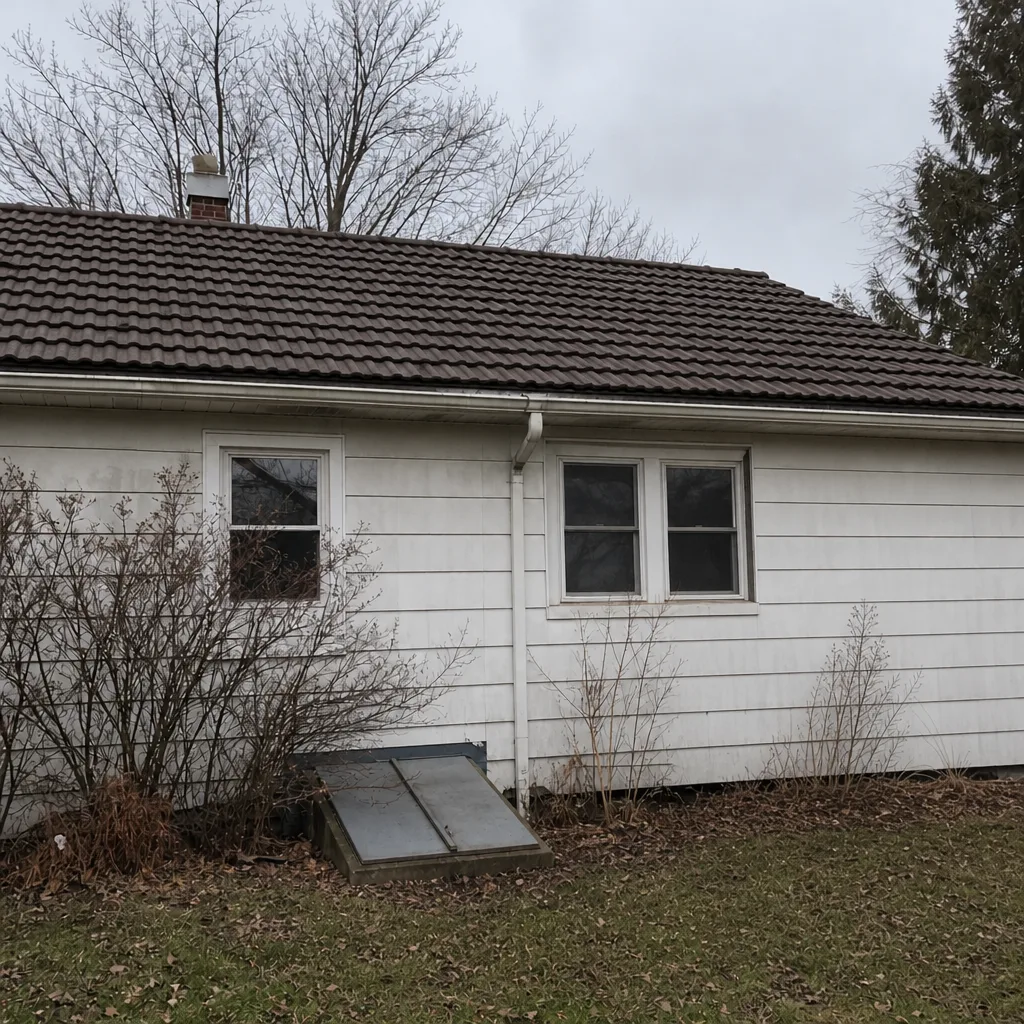 After
When to Call a Professional
Some tasks are yours: clearing gutters, photographing damage, noting where ice forms. Others call for a trained eye. Call a professional if you see water staining on ceilings or walls, if flashing is visibly cracked or rusty, if there’s soft or rotten wood behind the gutters, if shingles are lifted across a wide area, or if the granule loss you’re seeing turns out to be heavy. Those are the signals that a ground-level look isn’t enough.
Stratford Roof Repair offers free estimates in Syracuse. Call (844) 834-3413. We’ll inspect the roof, tell you honestly whether a repair will hold, and give you a clear recommendation without pushing replacement where it isn’t needed. Inspection first, so you can decide with real information instead of guesswork. For a closer look at our whole Syracuse service area, that’s where to start.
Frequently Asked Questions
Three checkpoints a year covers it: late fall before the freeze, mid-winter after ice builds, and spring after the thaw. Add a quick binocular pass after any big wind event. That rhythm catches nearly every issue before it compounds.
A little grit is normal wear. A heavy accumulation at downspout outlets, or bare asphalt patches visible on the shingles, means your roof is in its later years and an inspection is worth scheduling. It’s one of the clearest ground-level signals of shingle age.
Clearing gutters from a ladder at ground level is reasonable for many homeowners, as long as it’s dry and you’re cautious. If your roofline is steep or high, or if you spot rot behind the gutter, have a professional handle it. And never work on a wet or icy ladder.
Recurring ice dams usually mean a ventilation or insulation issue directly above that spot, not just a gutter problem. Warm air escapes and melts snow that refreezes at the cold eave. A professional can check the attic side, not just the roof surface.
It depends on whether you can identify the source. A crack in flashing sealant is a small fix, but a small leak that appears indoors often traces back further than you can see. When a leak is recurrent, or you can’t pin down the source, get it inspected.
Your dated photos, your written notes on what you observed, and the location of any interior staining. That documentation lets a contractor scope the work accurately and often reduces the time needed on site. Call for a free estimate when you’re ready.
The Bottom Line
Your roof in Syracuse moves through a predictable failure sequence every year, and every step in it can be interrupted. Clear the gutters before November. Check the flashing points in the fall while the weather allows. Watch your shingles from the ground after the thaw, and pay attention to granule loss in the gutters. Document what you see, with dates. Do those things and you’ll catch problems while they’re still small repairs. Skip them and the roof sets the schedule for you. Inspection first, repair when it makes sense, and a straight answer on when it doesn’t.
Call Stratford Roof Repair at (844) 834-3413 for a free estimate. We answer 24/7. Fast dispatch from 7am to 7pm, Sunday through Friday. Not sure where to start? Roof inspection is the first step, and it’s no obligation. When a repair or roof replacement is the right call, we’ll walk you through the material options across all seven brands and recommend the one that fits your roof and your budget. Seven brands. One recommendation: the right one for your roof.
Written by the team at Stratford Roof Repair.