
Last updated November 15, 2026
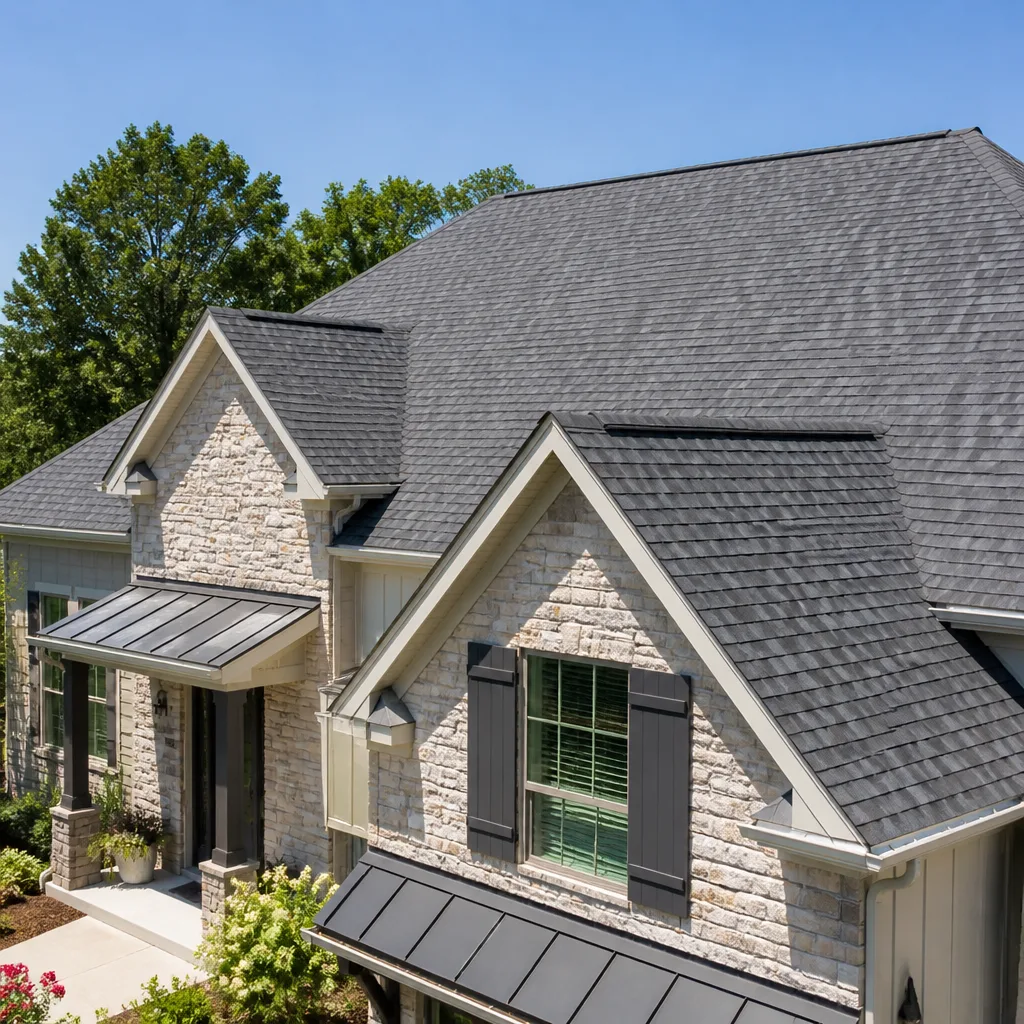 Architectural shingles
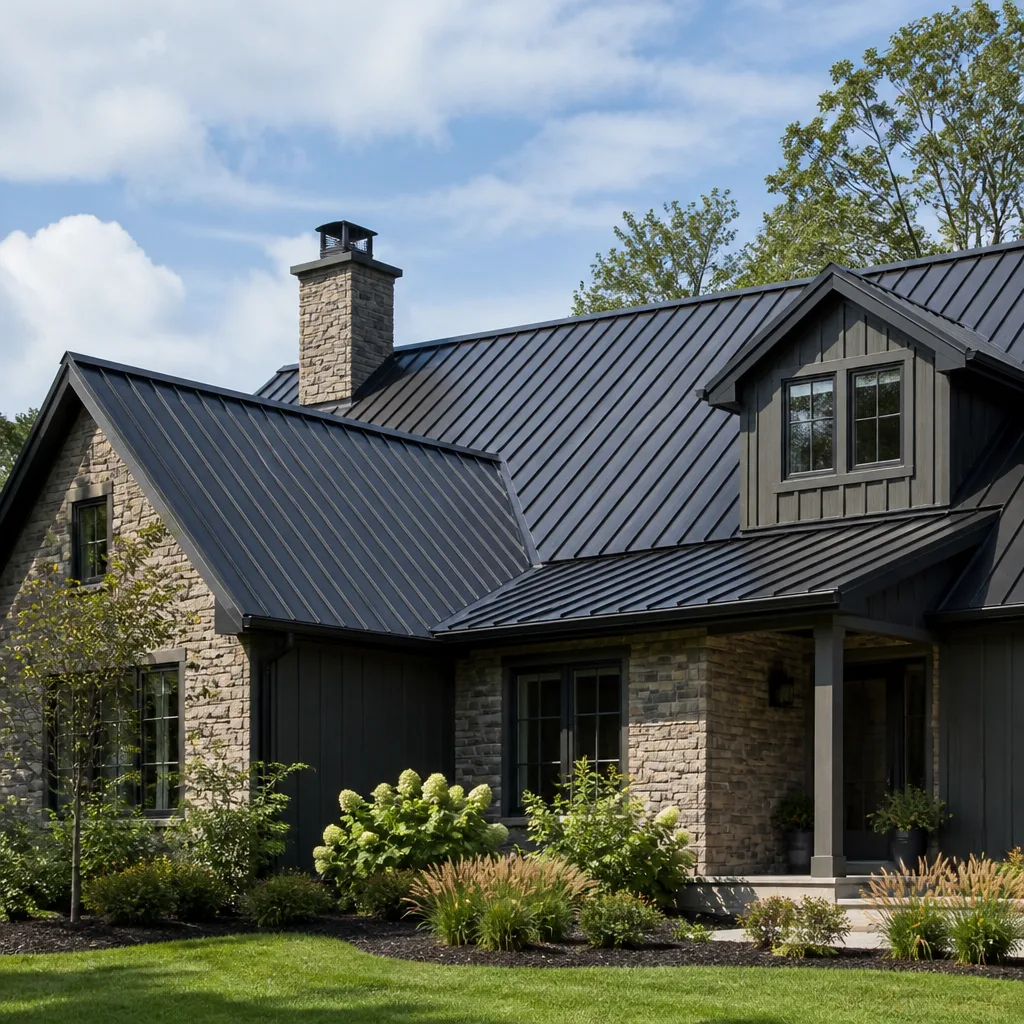 Metal roofing
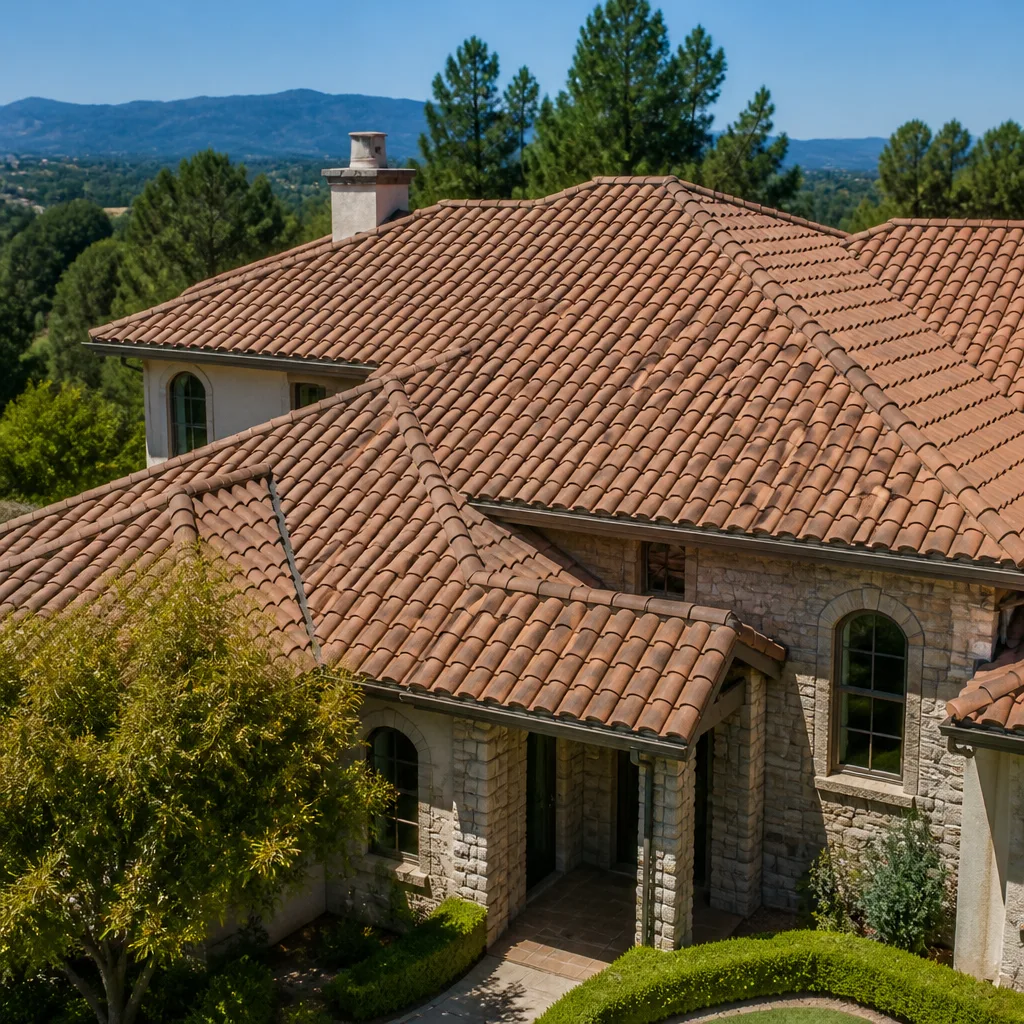 Tile roofing
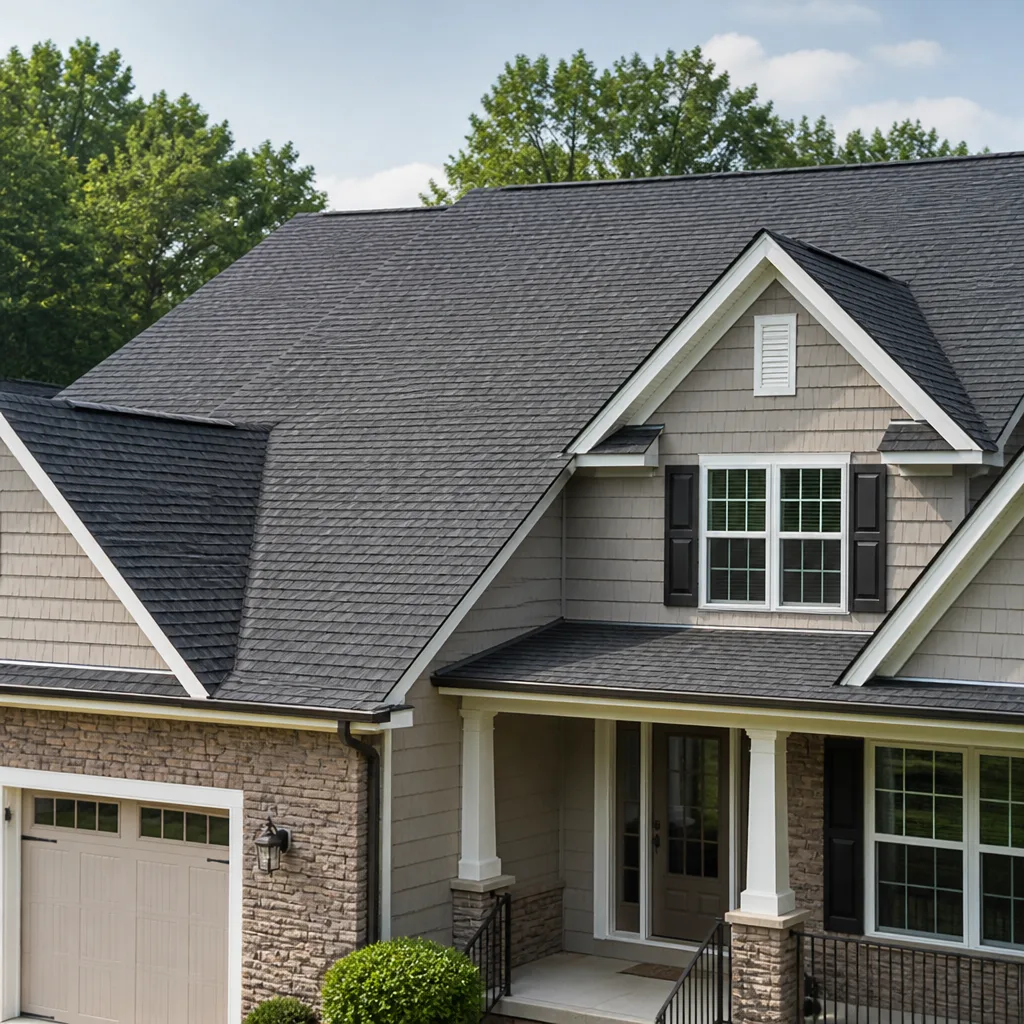 GAF
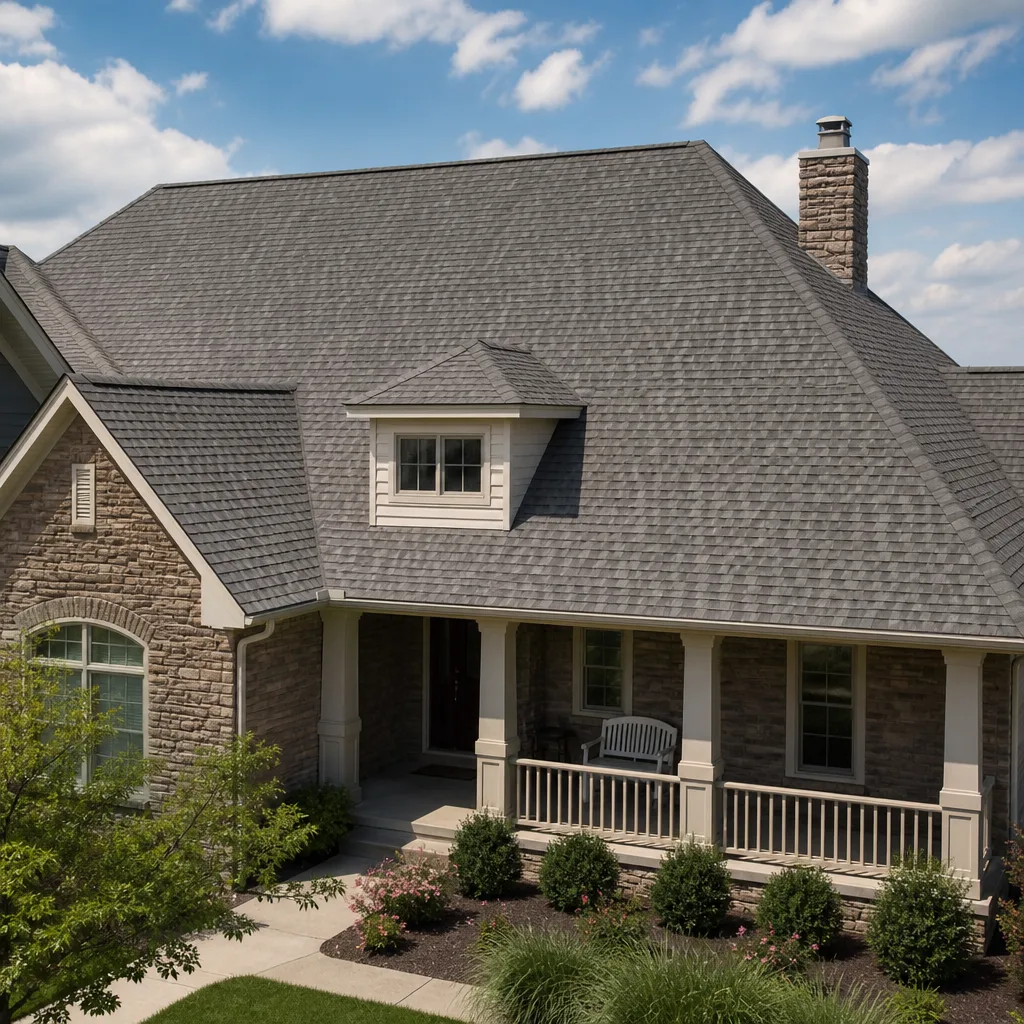 Owens Corning
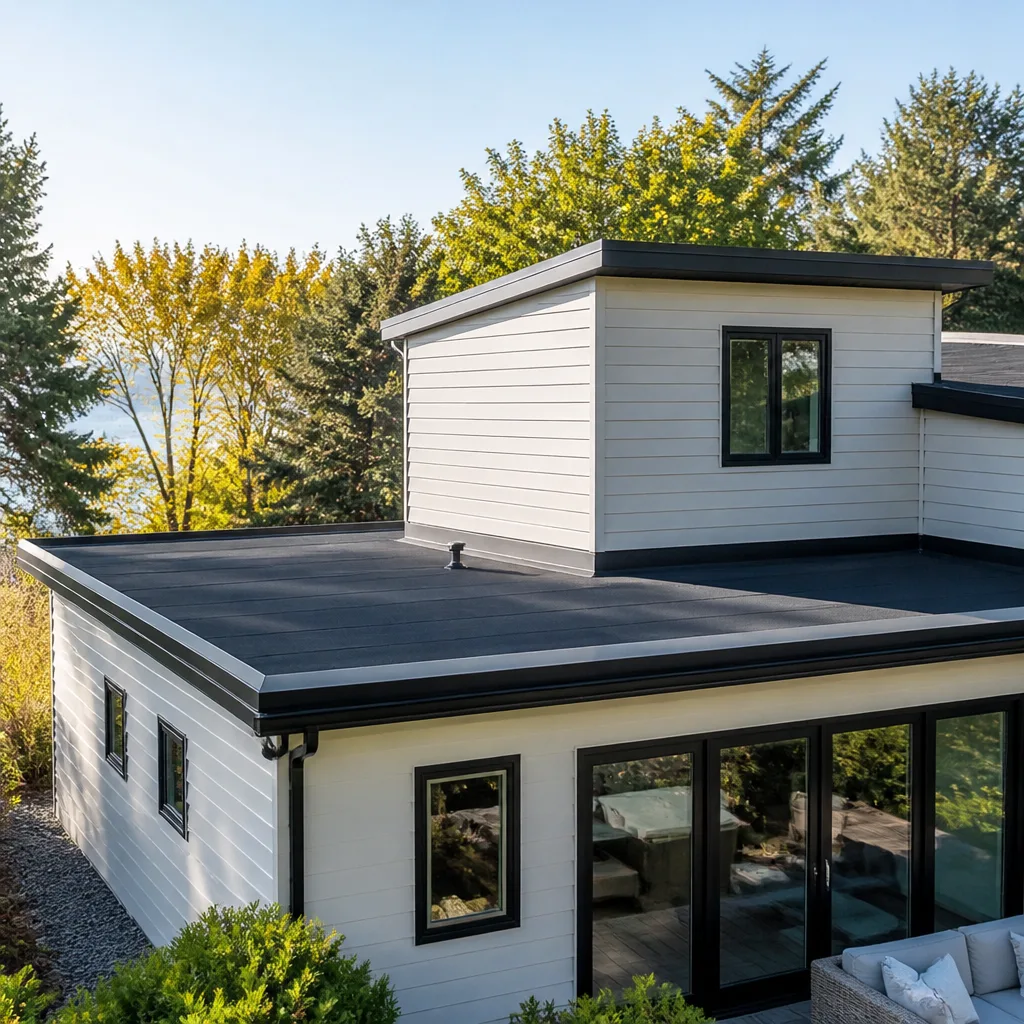 Flat & low-slope
Free roof inspection with deck photos before we talk money - GAF and Owens Corning certified installation
Roof Repair Troubleshooting in Syracuse: Common Problems and How to Fix Them
A ceiling stain in a second-floor bedroom in January is almost never a missing shingle directly above it. In Syracuse, it’s more often a failed ice dam at the eave three feet away. Water travels along decking, rafters and insulation before it finds a way through your ceiling, which is why chasing the wrong source is the number-one reason repairs get done twice. This guide teaches you to work backward from the symptom to the actual entry point, using the leak pathways we see repeatedly in Syracuse’s older housing stock. You’ll learn what each sign probably means, which repairs you can safely handle, and which ones demand a professional.
Quick Answer
Most roof leaks in Syracuse come from ice dams at the eaves, failed step and counter-flashing at walls and chimneys, and worn pipe boots rather than missing shingles. Diagnose from the attic first: trace the water trail backward to where it enters the roof deck, because the ceiling stain is rarely below the true source. Ice dam damage, flashing failure and shingle failure all look similar from inside but need completely different repairs.
Styles & brands we work with
- Architectural shingles
- Metal roofing
- Tile roofing
- GAF
- Owens Corning
- Flat & low-slope
Table of Contents
- The Problem-First Diagnostic Matrix
- Ice Dam Damage vs. Flashing Failure vs. Shingle Failure
- The Attic Inspection Walkthrough That Finds Most Leaks
- Why Low-Slope Sections on Cape Cods and Ranches Fail Differently
- The Two Repairs Homeowners Try Themselves (and How They Go Wrong)
- What Roof Repairs Typically Cost in Syracuse
- Repair or Replace? How to Decide
- Seasonal Troubleshooting: What Shows Up When
The Problem-First Diagnostic Matrix
Start with the symptom, then work toward the likely cause. This matrix maps the eight problems Syracuse homeowners report most often to the root causes we find behind them. Treat it as a starting point, not a verdict – the only way to confirm is to trace the water path in the attic, which we cover further down.
- Brown ceiling stain, often spreading slowly: Most often a failed ice dam at the nearest eave, a worn pipe boot, or a flashing gap at a sidewall. Look for the stain to appear after freeze-thaw cycles.
- Granules collecting in the gutter or at the downspout outlet: Normal in small amounts on a newer roof; heavier loss points to aged, brittle shingles near the end of their life or impact damage from a fallen branch.
- Daylight visible through the attic roof boards: A gap in the decking, a missing or slipped shingle, or a hole from an old penetration like a removed vent. Daylight means an open path for water.
- Water staining on attic rafters or sheathing: Usually an active or old leak. Note where the stain is darkest – water travels downhill, so the source is uphill from the stain.
- Damp insulation or sagging attic floor near an exterior wall: A strong signal of ice dam water backing up under the shingles at the eave and soaking down through the structure.
- Peeling paint, soft wood or rust at fascia and soffit: Chronic water at the eave, often ice dam related or a gutter that overflows because of a low-slope valley concentrated above it.
- Interior water at a chimney or wall junction: Almost always flashing. Step flashing, counter-flashing or a chimney cricket that has lifted or corroded.
- Musty smell in the attic, no visible stain: A slow, persistent leak feeding mold on the deck. Common where a low-slope section meets a steep slope and the transition flashing has failed.
Notice how few of these point to a single missing shingle. That’s the core of troubleshooting in Syracuse: the roof surface takes the abuse, but the water gets in at the transitions – eaves, valleys, walls, chimneys and penetrations. Our roof repair work starts with confirming which of these pathways is actually active before anyone touches shingles.
Ice Dam Damage vs. Flashing Failure vs. Shingle Failure
These three failures present almost identically from inside a Syracuse home, yet each needs a different fix. Getting the diagnosis wrong wastes money and lets the real problem keep degrading the roof. Here’s how to tell them apart.
Ice dam damage
Ice dams form when heat escaping the attic melts snow on the upper roof, and the meltwater refreezes at the cold eave. The resulting ice ridge traps water, which backs up under the shingles and into the structure. Signs: staining or dampness that appears during or right after a thaw and often runs horizontally along an exterior wall, icicles at the gutter line, and water that shows up at the outer wall rather than deep in the ceiling. The fix is usually two-part – clear the immediate problem and correct the attic ventilation and insulation that let the heat build up in the first place.
Flashing failure
Flashing failure is a year-round leak that doesn’t care about the season. It shows up at walls, chimneys, skylights and valleys, and it’s driven by failed sealant, lifted metal, corrosion or a missing cricket behind a chimney. Signs: water during any steady rain, staining concentrated at a vertical junction, and rust or softness on the metal itself. Re-sealing with caulk almost never holds – the metal or its integration into the shingles usually has to be rebuilt.
Shingle failure
Shingle failure is the one people assume first and find last. Signs: missing, cracked or curled shingles, heavy granule loss, and leaks that trace to an actual breach in the field of the roof. On newer roofs this is usually impact damage from a limb; on older roofs it’s the shingles reaching the end of their service life. The repair can be a localized patch only if the surrounding shingles are still pliable enough to work with.
Ice dams do most of their damage in Syracuse because of the region’s lake-effect winters and the freeze-thaw cycles that follow – snow that melts by day refreezes at night, and the cycle repeats across weeks. A single hard winter can open up weaknesses that stayed hidden for years. When we diagnose a Syracuse roof, distinguishing these three is the whole job.
The Attic Inspection Walkthrough That Finds Most Leaks
You don’t need to go on the roof to find the source of most active leaks. Roughly eight in ten active water entries we trace are confirmed from inside the attic. Here’s how to do a safe, methodical walkthrough. Stay on solid framing, wear gloves and a light, and don’t step on insulation or ceiling boards between the joists.
- Start on a rainy day or right after one. Water is only visible when it’s moving. A dry-day inspection finds old stains, not active ones.
- Bring a bright flashlight and follow the framing. Look along the underside of the roof deck and each rafter, working from the highest point of staining downhill.
- Trace the water backward. Water runs along the low edge of rafters and across decking. The entry point is uphill from the stain, often at the next seam or junction, not directly above it.
- Look first at the transitions. At the eave for ice dams, at every vertical wall for step and counter-flashing, at the chimney for cricket and flashing, and at every pipe and vent penetration for a split boot.
- Check the low-slope junctions. Where a flat or low-slope section meets a steep one, the transition flashing is a frequent failure point. Look for lifted metal or exposed nails.
- Examine the insulation below each suspect area. Damp, compressed or discolored insulation tells you water has been getting in there, even if the deck looks dry.
- Photograph everything. A clear photo of the stain, the framing and the junction helps a professional confirm the diagnosis without repeat visits.
What you’re doing is building a case, not guessing. Confirm the source by seeing the water trail, then match it to the matrix above. If the trail dead-ends or you can’t safely reach an area, that’s the point to bring in a professional assessment rather than climb on a wet roof. A roof inspection as a standalone service lets you get that answer without committing to a repair.
Why Low-Slope Sections on Cape Cods and Ranches Fail Differently
Syracuse’s older neighborhoods are full of Cape Cods, ranch homes and additions where a low-slope section – a rear addition, a porch roof, a dormer or a garage tie-in – meets the main steep-slope roof. These areas fail by a different mechanism than the steep sections above them, and treating them the same way is a common and expensive mistake.
On a steep slope, water sheds fast and gravity does the work. Shingles overlap heavily and any water that gets under the edge runs back out. On a low-slope section, water sits longer and moves sideways as much as down. Shingles intended for a steep pitch don’t perform well at a low pitch, and seams, penetrations and transition flashings become the weak points. The failure mechanism is different: standing water, seam fatigue, and ponding rather than shed-and-overlap.
What this means in practice:
- Low-slope repairs need materials rated for the lower pitch, not a shingle patched over the top of the failing section. Using the wrong product is one of the most common reasons a low-slope leak returns within a season.
- The transition where the low-slope section meets the steep roof is where water collects and is the first place to inspect. Lifted or under-lapped transition flashing is a frequent culprit.
- Attic ventilation over low-slope sections is harder to get right, and poor ventilation accelerates ice dam formation above them in Syracuse winters.
- Ponding that lasts more than a day after rain is a structural and membrane problem, not a shingle problem.
When the low-slope section is genuinely worn out and a patch won’t hold, we say so – and when a proper repair will extend its life, we say that instead. Our material selection spans entry-level through premium lines across several manufacturers, including GAF and Atlas, so the recommendation follows your roof and your budget rather than a single brand. If the section can’t be saved, roof replacement may be the sounder path, but only after an honest inspection says so.
The Two Repairs Homeowners Try Themselves (and How They Go Wrong)
Two repairs get attempted at home more than any others: replacing a tab shingle and resealing flashing. Both can be done safely in the right conditions, and both go wrong in predictable ways that make the problem worse. Here’s what actually happens, and where the line is.
Replacing a tab shingle
The mistake isn’t the idea – it’s the execution. Homeowners pry up the tabs above the damaged shingle and crack them, or nail through the overlapping shingle above and create a new leak at the nail head. The repaired tab doesn’t seal flush with the course above, so wind and water get under it. And on an older roof, the surrounding shingles are brittle enough that lifting them does as much damage as the original problem. A sound shingle replacement means carefully freeing the sealed tab, sliding the new shingle into the correct overlap and sealing it flush – which requires the surrounding shingles to still be pliable. If they’re not, a patch won’t hold no matter how carefully you work.
Resealing flashing
Smearing caulk over lifted step flashing or a chimney junction is the single most common DIY move, and it almost always fails. Caulk over a wet or dirty surface traps moisture and lets the metal keep lifting underneath. Even a clean, dry sealant job doesn’t solve the real problem if the flashing itself has lifted, corroded or was under-lapped to begin with – the metal has to be re-integrated with the shingles, not glued down. The result is a repair that looks fixed until the next hard rain, then leaks again in the same place.
A safety note before you climb: any work that puts you on the roof, especially in Syracuse winter conditions with snow, ice or cold making shingles brittle, is a genuine fall risk. Working near the eave or a valley on a wet or icy roof is where most serious injuries happen. If you can’t stay safely on the ladder and reach the repair without stepping out on a steep or slippery surface, stop. Pipe boots and eave areas near ice and snow are best left to a trained professional. We’ll tell you if a repair will hold – and we’ll tell you when it won’t.
What Roof Repairs Typically Cost in Syracuse
Repair costs vary with the cause, not just the symptom. An ice dam repair is a different scope than a chimney flashing rebuild, and a localized shingle patch is different again. The table below shows typical estimated ranges for the common repairs in Syracuse; your written line-item estimate sets the final price, and the estimate itself is free.
- Localized shingle patch (a few damaged shingles): typically a low, flat-range job, on the smaller end for a handful of tabs and larger if a whole small section has failed.
- Pipe boot replacement: commonly one of the least expensive repairs, since the boot is a small component and the fix is straightforward.
- Ice dam diagnosis and eave repair: varies with how much water backed up and whether attic ventilation and insulation corrections are added; the snow-clearing and repair portion is separate from any attic work.
- Step and counter-flashing rebuild at a wall: a mid-range repair that involves opening the shingles, replacing the metal and re-integrating it correctly.
- Chimney flashing and cricket repair: on the higher side for flashing work because of the geometry and the need to rebuild the transition.
- Low-slope membrane section repair: priced by the square footage of the failing section and the membrane used.
- Full inspection (standalone): a professional assessment you can get before deciding on any repair, with no obligation to proceed.
Two things drive the number more than anything else: whether the fix is a localized component or a rebuild of a transition, and whether the underlying cause (ventilation, a failed transition, standing water) needs correcting at the same time. Price the diagnosis with the repair, not separately, or you’ll pay twice. For an exact figure, call (844) 834-3413 – estimates are free.
Repair or Replace? How to Decide
The decision comes down to one question: will a repair be a sound long-term solution, or a patch that buys a season while the rest of the roof fails around it? We recommend replacement only when repair isn’t sound, and we tell homeowners honestly which side of that line their roof is on.
A repair usually makes sense when:
- The failure is localized – one transition, one penetration, one damaged section – and the surrounding shingles are still pliable and sealing well.
- The shingles have usable service life left and granule loss is modest.
- The leak has one clear cause you can confirm in the attic.
- The deck and framing underneath are sound.
Replacement is usually the sounder call when:
- Leaks are showing up in multiple unrelated places, a sign the shingles as a whole are failing.
- The shingles are brittle, heavily granule-depleted or curling across the field.
- A low-slope section is ponding and the membrane is at the end of its life.
- Repeated repairs have already been done in the same spots, meaning the last patches didn’t hold.
If you’re getting pressure to replace a roof that a repair would fix, get a second opinion. Inspection first, no pressure, no guesswork. Because we work across several manufacturers including Tamko and Boral, the material recommendation – entry-level or premium – is driven by your budget and roof conditions, not by which brand we’d rather sell.
Seasonal Troubleshooting: What Shows Up When
Roof problems in Syracuse follow the calendar. Knowing what tends to appear when helps you catch a failure before it does interior damage.
- Deep winter and thaws: ice dam season. Water stains, icicles at the gutter line and damp exterior walls are the tell. If a door fails in the middle of a winter thaw, the priority is clearing the water path and correcting the heat loss above.
- Spring rain: flashing failures show themselves in steady rain – chimney, wall and skylight junctions that stayed quiet in the dry cold.
- Summer storms: impact damage from limbs and wind-lifted shingles, plus the granule loss that only becomes obvious once the gutters carry it.
- Fall: the best window for planned repairs. Get the flashing and any low-slope section corrected before the freeze-thaw cycles begin.
If something fails outside our dispatch hours, call anyway. We answer 24/7. Fast dispatch from 7am to 7pm, Sunday through Friday. A call outside dispatch hours is booked into the next opening, Sunday through Friday, 7am to 7pm. We’re closed on Saturday.
Common Mistakes to Avoid
- Assuming the ceiling stain is directly below the leak. It almost never is. Water runs along framing and decking, so trace it uphill to the real entry point before anyone touches a shingle.
- Treating an ice dam like a shingle problem. Clearing ice and replacing the shingle above the stain won’t stop it recurring next winter. The attic heat source has to be addressed too.
- Caulking over lifted flashing. Sealant over a wet or dirty surface fails fast. If the metal has lifted or corroded, it needs to be rebuilt, not glued.
- Patching a low-slope section with steep-slope shingles. The wrong product on a low pitch is one of the most reliable ways to get the same leak back within a season.
- Nailing through the shingle course above a repair. A nail head that misses the framing leaves a fresh hole and a new leak directly above the fix.
- Going on an icy or snowy roof to inspect. In Syracuse winters this is a genuine fall risk. Trace the leak from the attic and leave the roof surface to a professional.
- Accepting a replacement quote on a repairable roof. If the problem traces to one transition or one section, ask whether a repair will hold before agreeing to tear off the whole roof.
See the difference
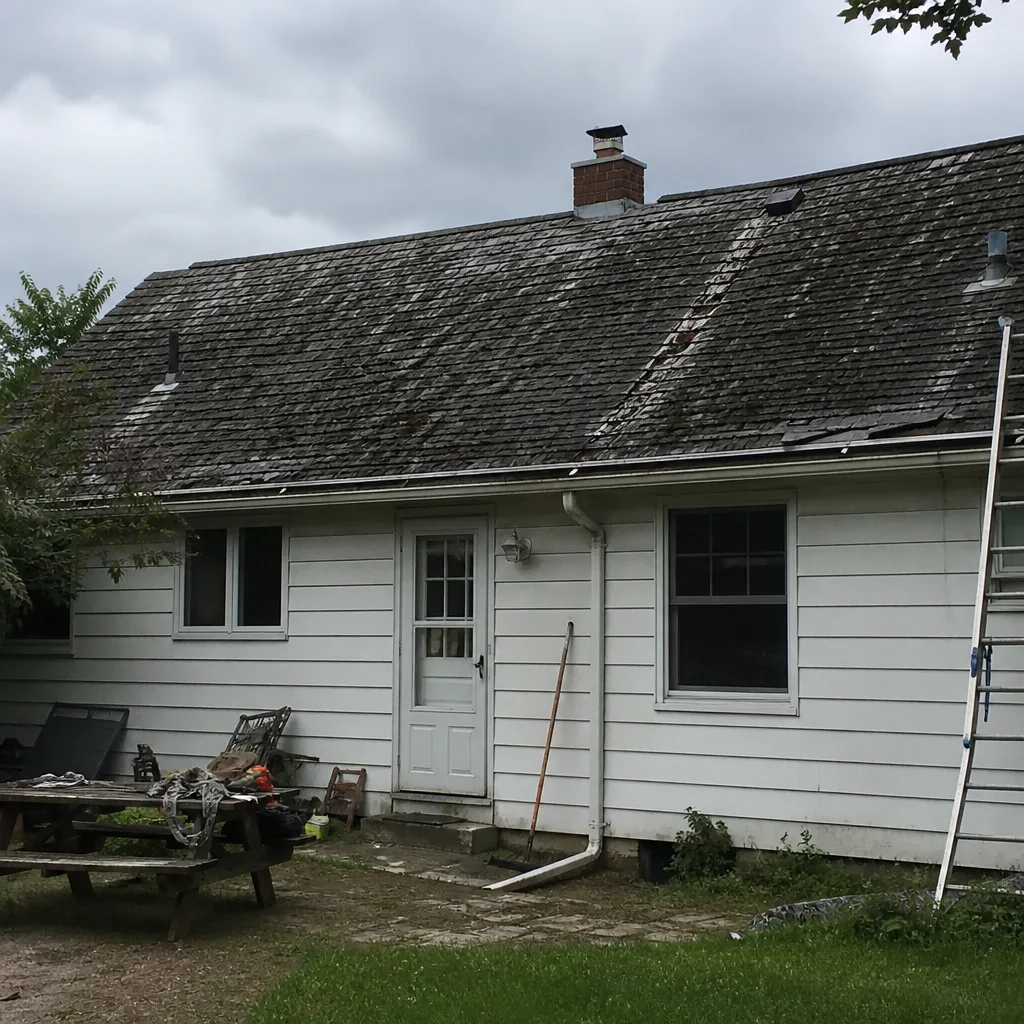 Before
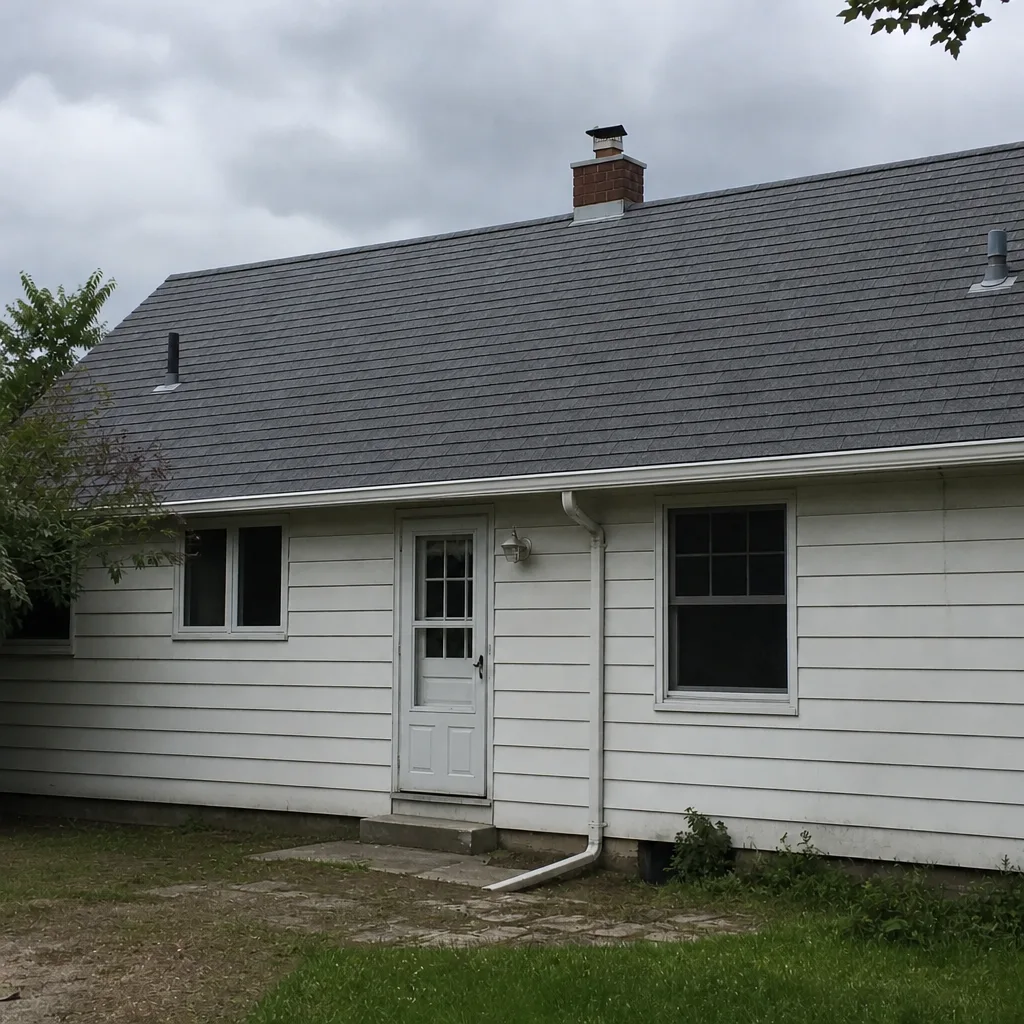 After
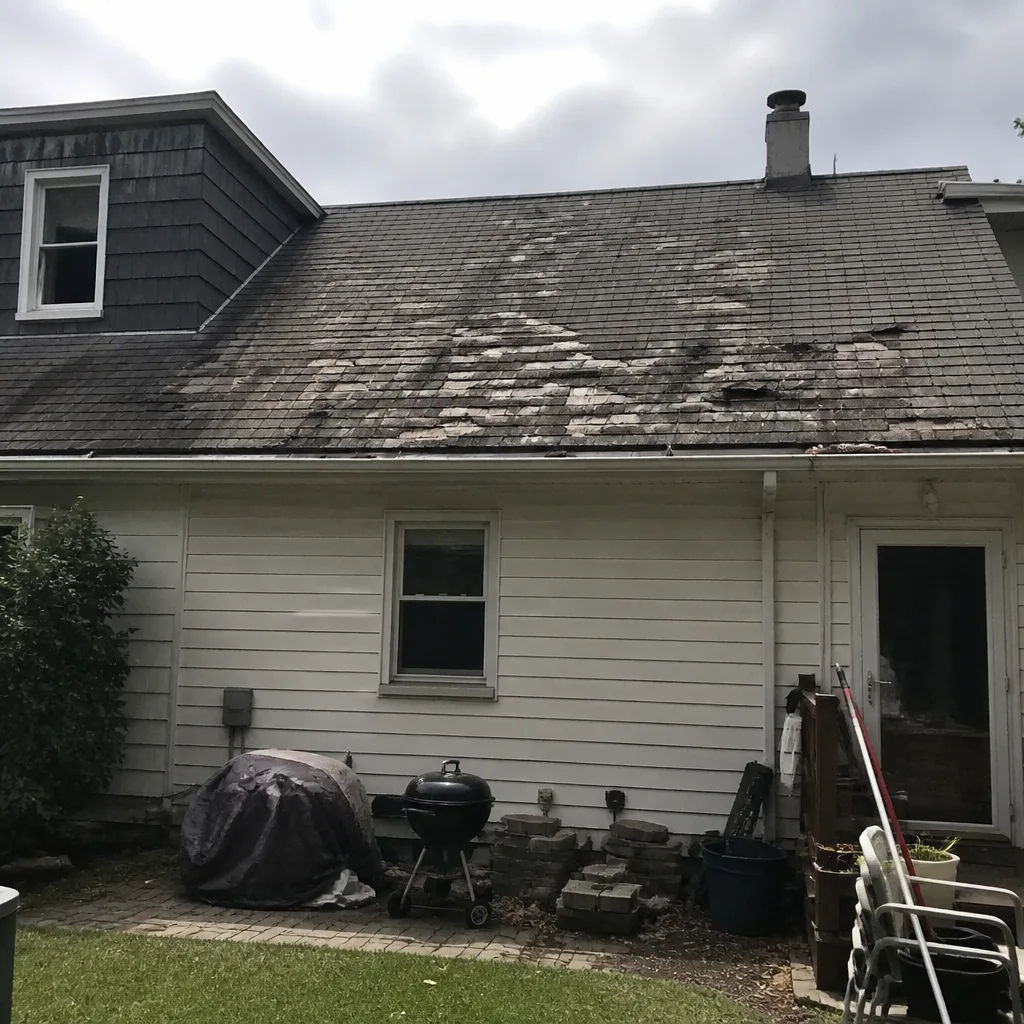 Before
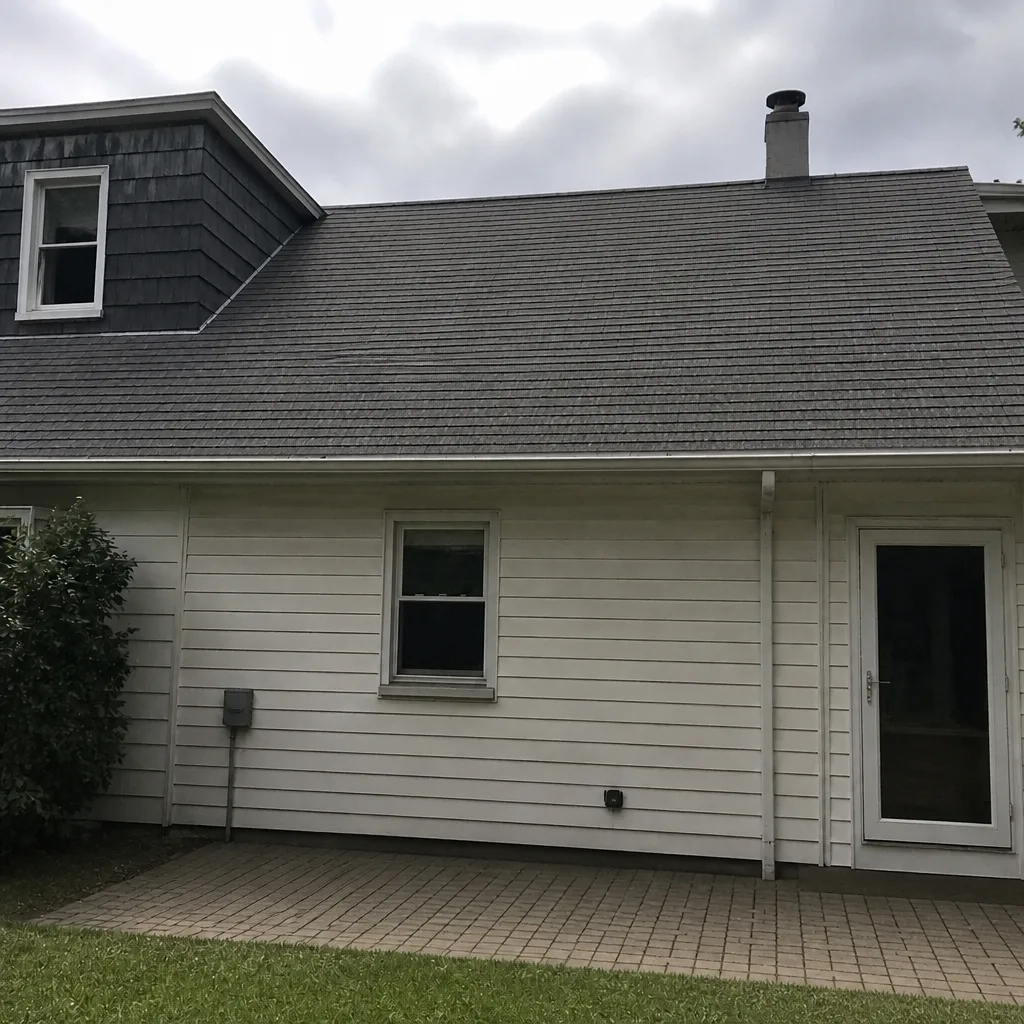 After
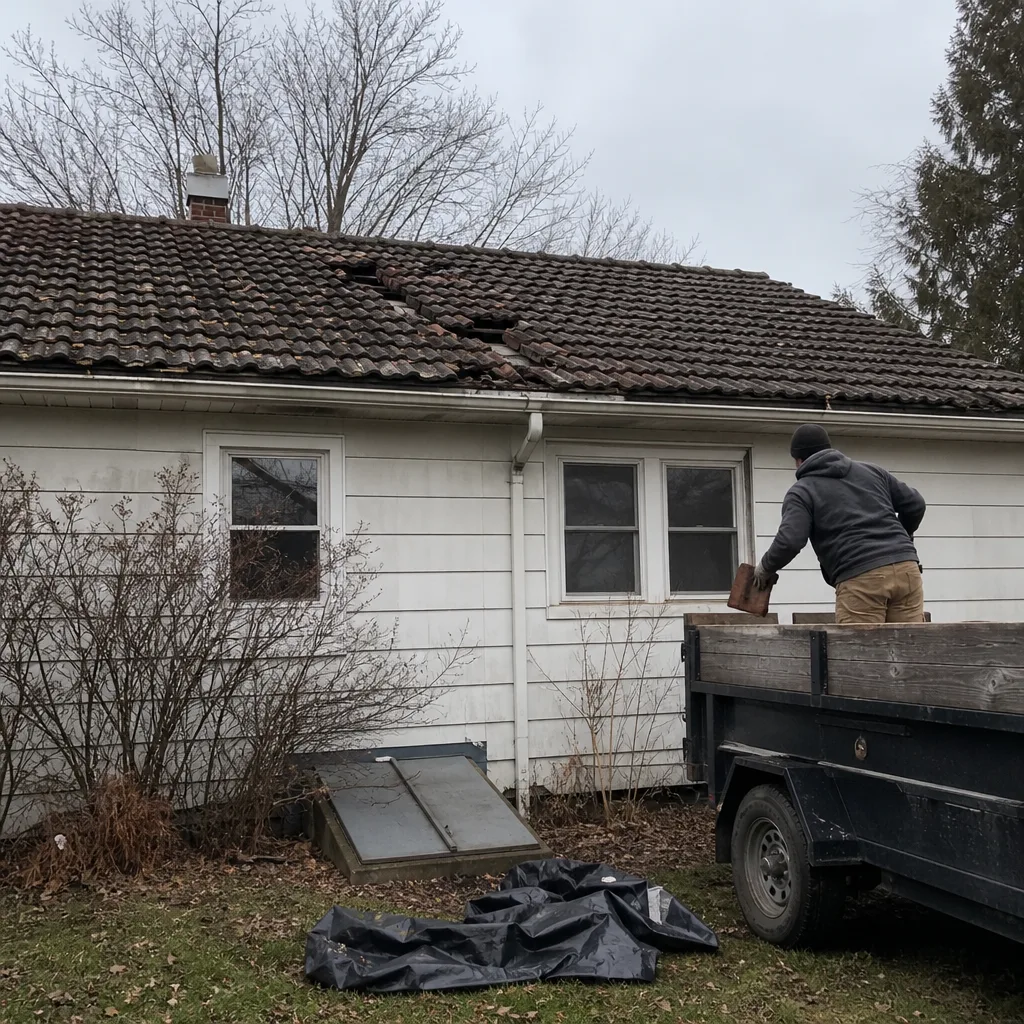 Before
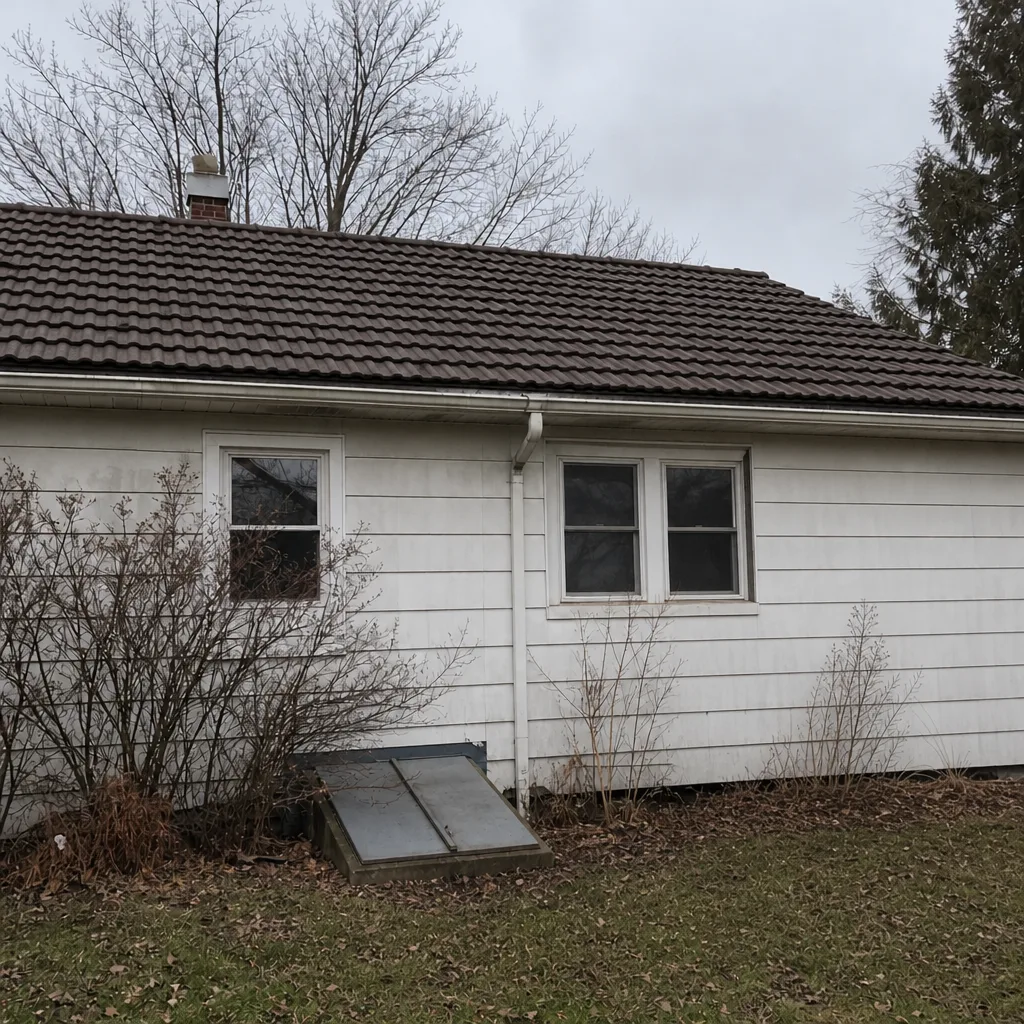 After
When to Call a Professional
Call a professional when the water trail leads somewhere you can’t safely reach, when the same spot has leaked after a repair, or when you’re not sure whether the cause is ice, flashing or a failing shingle – because the wrong diagnosis means paying for the same repair twice. Also call if you see daylight through the deck, if the leak is at a chimney or low-slope transition, if ponding lasts more than a day, or if a quote for replacement arrives before anyone has actually traced the leak. Our technicians have up to 15 years of experience and share a single specialty: roofing only. Stratford Roof Repair offers free estimates in Syracuse – call (844) 834-3413. We answer 24/7, with fast dispatch from 7am to 7pm, Sunday through Friday.
Frequently Asked Questions
Trace it from the attic, not the roof surface. Follow the water uphill from the stain along the framing and decking to the first failure point – usually an eave with an ice dam, a wall or chimney flashing, or a pipe boot. The ceiling stain is rarely directly below the true entry. Call (844) 834-3413 for an exact diagnosis – estimates are free.
Not always. In Syracuse, a winter stain that appears with thaw cycles is very often an ice dam, which is a roof-surface and attic-ventilation issue rather than a simple shingle leak. A year-round stain that worsens with steady rain points to flashing. Confirming in the attic separates the two.
You can in narrow conditions – the surrounding shingles must still be pliable enough to lift and reseat without cracking, and you need to work safely on the roof. On an older or cold roof the tabs are brittle and the patch often does more harm. If the surrounding shingles won’t lift cleanly, a shingle patch won’t hold.
Because sealant over a wet or dirty surface traps moisture and lets the metal lift underneath. Even a clean bead doesn’t solve a flashing that has lifted, corroded or was under-lapped to begin with. Flashing has to be re-integrated with the shingles, not glued down. We can rebuild a transition properly – call (844) 834-3413 for a free estimate.
Repair if the failure is localized, the surrounding shingles are still serviceable and the leak has one confirmed cause. Replacement is the sounder call when leaks appear in multiple unrelated places, the shingles are brittle and granule-depleted, or a low-slope section is ponding past its life. Get an inspection before deciding – there’s no pressure to commit to either.
Fall, before the freeze-thaw cycles start, is the best window for planned repairs – flashing and low-slope sections corrected while materials are workable. But active leaks shouldn’t wait for the calendar. If water is getting in now, it’s worth addressing now rather than letting it soak the structure through the winter.
The Bottom Line
Troubleshooting a roof in Syracuse starts with a simple discipline: work backward from the symptom to the source, and don’t assume the stain sits under the leak. Ice dam damage, flashing failure and shingle failure all look alike from inside but need entirely different repairs, and the attic walkthrough confirms the cause before anyone touches the roof. Low-slope sections on Cape Cods and ranches fail by their own mechanism. Handle a small shingle or flashing repair yourself only when the surrounding materials are still pliable and you can stay safely on the roof – otherwise it’s a professional job. And when a quote points straight to replacement, ask whether a repair will hold first. Inspection first, no pressure, no guesswork.
Call Stratford Roof Repair at (844) 834-3413 to schedule your free estimate in Syracuse. We answer 24/7. Fast dispatch from 7am to 7pm, Sunday through Friday, with a written line-item quote so you know exactly what the job involves. Seven brands, one recommendation: the right one for your roof.
Written by the team at Stratford Roof Repair.